
Cows could follow sheep up the Mourne Mountains to help fire regeneration work
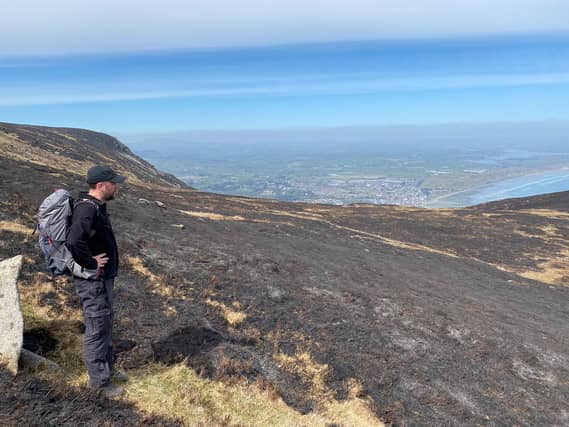

Cows could be set for some rarefied grazing on the Mountains of Mourne as part of efforts to repair wildfire devastation.
Conservationists are examining whether the palates of hardy cattle like Highlands or Galloways could be suited to regenerating the diverse habitats scorched by the huge fire that swept over Slieve Donard in April.
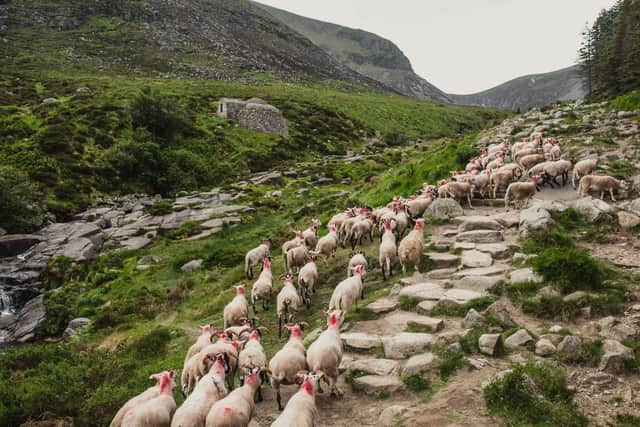
Using GPS tracking collars worn by some of the 400 animals in the flock, rangers have been assessing whether their eating habits have helped to control the spread of fast-growing invasive species.
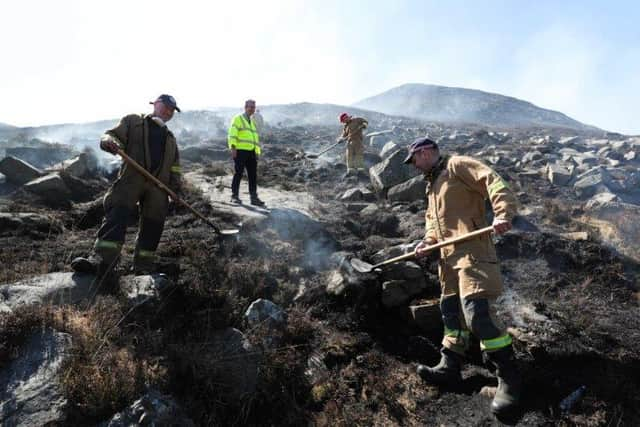
The blaze, which was started deliberately, raged for three days and it took 100 firefighters to bring it under control.
Around 950 acres of land were damaged, more than half of which is owned and managed by the National Trust.
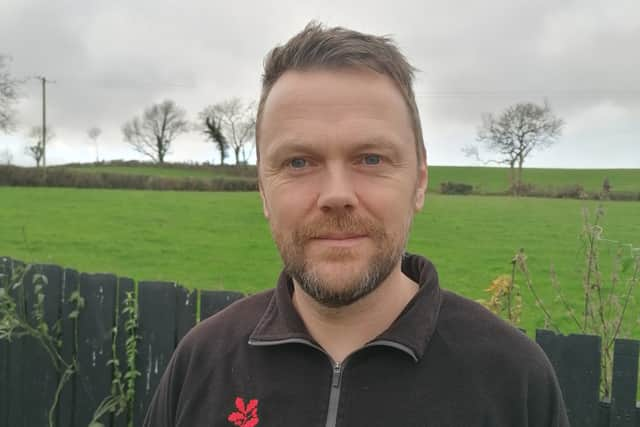
He said there is concern that the former rich biodiversity of the landscape may not return if invasive species such as purple moor grass take over before heathers can regenerate.
“That green isn’t always good,” said Mr Lynch.
“What we’re finding is that green can be bracken or purple moor grass.
“The purple moor grass is coming back and that’s quite an invasive plant, so we’re seeing vast swathes of purple moor grass where we should be seeing heather.
“What we’re finding is we’re losing a lot of the biodiversity within the area that we manage.”
And that is where grazing sheep and cows come in.
“What we have to do is manage that grazing right, so that we can remove as much of that purple moor grass as possible and encourage that more diverse range of vegetation to come in,” said Mr Lynch.
Rangers are assessing whether cows might be a better option, as they would be more likely to ignore the heather and stick with the moor grass.
“We may look at, for certain areas for short timescales, grazing with cattle,” he said.
“Some cattle will preferentially graze the purple moor grass, some hardy breeds like Highland cattle or Galloway may graze the purple moor grass but the regrowth of the heather would be too small at the moment.”
Mr Lynch, who has worked for the National Trust in the area for 15 years, said the fire was the biggest challenge the team had ever faced.
“There have been fires before but not on this scale,” he said.
“It was quite nice, actually, to see the reaction from the public and how outraged they were, and while it was not a good thing, it has raised the profile of the Mournes and how important they are, and that people really feel an affinity with the Mournes.
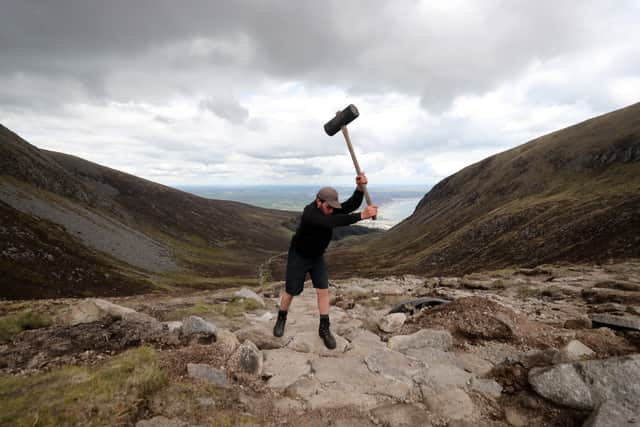
Despite the fire, work has continued on a major project to repair a path up the Mournes.
Since 2019, around 1.2 miles (2km) of path repairs have been completed on the route to the summit of Slieve Donard.
Heather McLachlan, director of National Trust Northern Ireland, said: “The devastating wildfire, which swept across the Mourne Mountains in April, has shone a light on the need for a long-term vision and a joined-up approach to the management of this iconic landscape.
“Thanks to recently secured funds from the Community Renewal Fund, we can continue that journey in 2022, to find out what the local community, surrounding land managers and those who love visiting the mountains think about these issues, and what a long-term holistic approach to conservation and nature might look like.
“We look forward to working collaboratively with partners in developing this vision.”