
Lord Steel gives backing to proposed buffer zones at abortion clinics
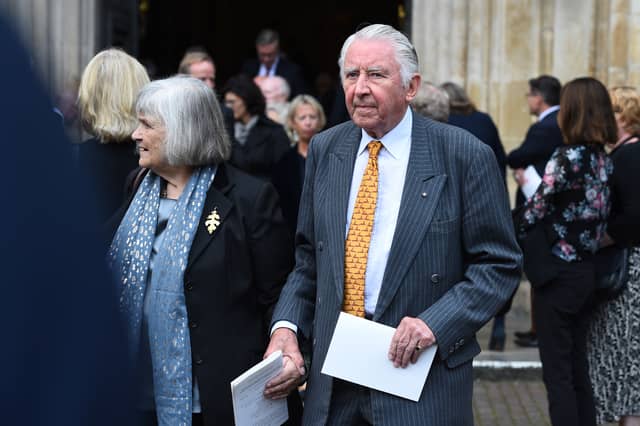

The architect of abortion laws in the UK has given his backing for proposed buffer zones in Scotland.
As a young MP, David Steel introduced a Private Member’s Bill which led to the creation of the Abortion Act 1967, legalising the procedure in the UK.
The former Liberal Party leader has now spoken of his approval towards tackling demonstrations held outside women’s healthcare clinics, and of his opposition to the Supreme Court’s decision to overturn the landmark Roe v Wade ruling.
Lord Steel said protesters have “no right to obstruct” a woman’s right to access abortion services.
His comments came after the First Minister convened an abortion summit on Monday, where attendees discussed possible actions to be taken in order to ensure women in Scotland can access services without fear, harassment or intimidation.
Calls for buffer zones have increased recently in response to campaigners holding anti-abortion vigils outside clinics in Scotland.
Lord Steel said: “We must respect those who disagree with abortion in principle, but they do not have to undergo abortions, and have no right to obstruct the majority of women who wish to have that right.
“That is why I support the effort of the Scottish First Minister to introduce protester buffer zones outside abortion clinics.”
He said decisions over the legality of abortion should be made by “parliaments, not the courts” after it was announced on Friday that the Supreme Court had voted to overturn the right to abortion in roughly half of US states.
He warned that the days of risking women’s health and lives by undergoing illegal abortions are “best forgotten”.
Lord Steel said: “It should also be remembered that in 1967, when the Abortion Act was passed and in 1973 with the Roe v Wade judgement, the only methods of abortion were surgical.
“Now a pill is available in the early months of pregnancy with surgical methods reserved for drastic cases later.
“We don’t want a return to the days when as many as 50 women a year in the UK died from illegal abortion and the public wards of most hospitals had patients suffering from ‘septic or incomplete abortion’. These days are best forgotten.”