
PM Scott Morrison concedes defeat in Australian election
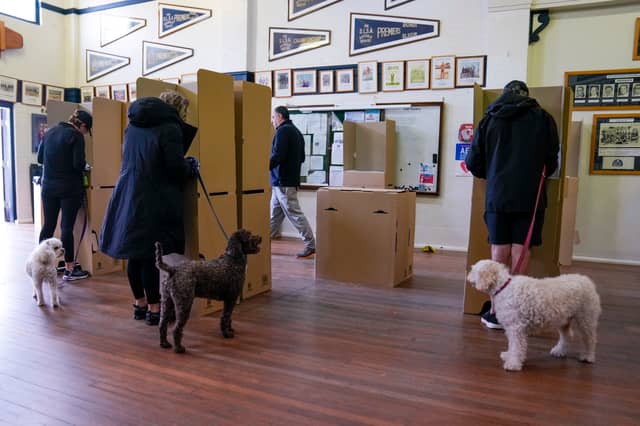

Australia’s prime minister has conceded defeat after an election that could deliver a minority government.
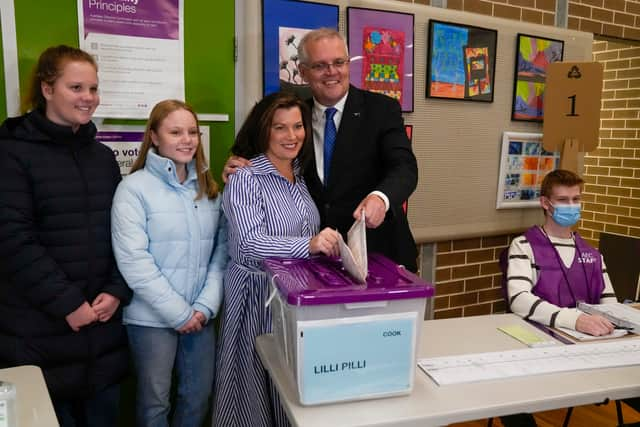
Prime Minister Scott Morrison acted quickly after Saturday’s election despite millions of votes yet to be counted because an Australian prime minister must attend a Tokyo summit on Tuesday with US, Japanese and Indian leaders.
“I believe it’s very important that this country has certainty. I think it’s very important this country can move forward,” Morrison said.
“And particularly over the course of this week with the important meetings that are being held, I think it’s vitally important there’s a very clear understanding about the government of this country,” he added.
His coalition holds the narrowest of majorities — 76 seats in the 151-member House of Representatives, where parties need a majority to form a government.
In early counting on Saturday, the coalition was on track to win 38 seats, Labour 71, seven were unaligned lawmakers and 23 were too close to call.
Australia most recent hung parliaments were from 2010-13, and the Second World War.
A record proportion of postal votes because of the pandemic, which will not be added to the count until Sunday, adds to the uncertainty in early counting.
As well as campaigning against Labour, Morrison’s conservative Liberal Party fought off a new challenge from so-called teal independent candidates to key government lawmakers’ reelection in party strongholds.
“What we have achieved here is extraordinary,” teal candidate and former foreign correspondent Zoe Daniels said in her victory speech. “Safe Liberal seat. Two-term incumbent. Independent,” she added.
The teal independents are marketed as a greener shade than the Liberal Party’s traditional blue colour and want stronger government action on reducing Australia’s greenhouse gas emissions than either the government or Labour are proposing.
The government’s Senate leader Simon Birmingham was concerned by big swings toward several teal candidates.

“If we lose those seats — it is not certain that we will — but there is clearly a big movement against us and there is clearly a big message in it,” Birmingham added.
The first polling stations closed on the country’s east coast at 6pm. The west coast is two hours behind.
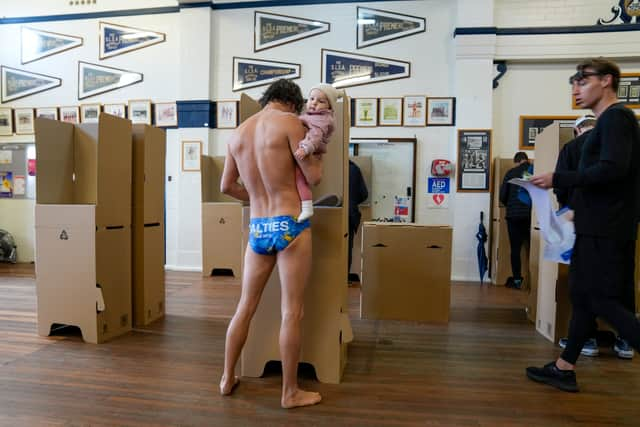
Due to the pandemic, about half of Australia’s 17 million electors have voted early or applied for postal votes, which will likely slow the count.
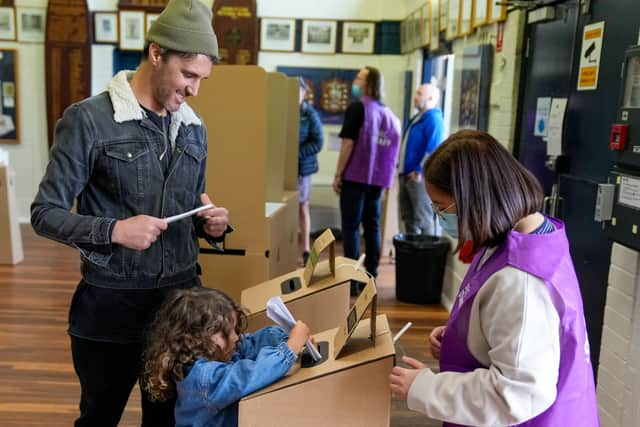
Early polling for reasons of travel or work began two weeks ago and the Australian Electoral Commission will continue collecting postal votes for another two weeks.
The government changed regulations on Friday to enable people recently infected with Covid-19 to vote over the phone.
Electoral Commissioner Tom Rogers said more than 7,000 polling stations opened as planned and on time across Australia despite 15% of polling staff falling sick this week with Covid-19 and flu.
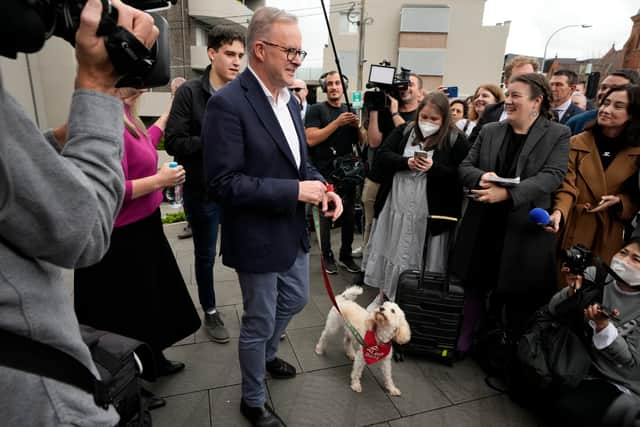
Albanese said he had thought Morrison would have called the election last weekend because Australia’s prime minister is expected at a Tokyo summit on Tuesday with US President Joe Biden, Japanese Prime Minister Fumio Kishida and Indian Prime Minister Narendra Modi.
“If we get a clear outcome today then whoever is prime minister will be on a plane to Tokyo on Monday, which isn’t ideal, I’ve got to say, immediately after a campaign,” Albanese said.
Analysts have said that Morrison left the election until the latest date available to him to give himself more time to reduce Labour’s lead in opinion polls.