
Police report warns ‘hard choices’ could see services reduce in some areas
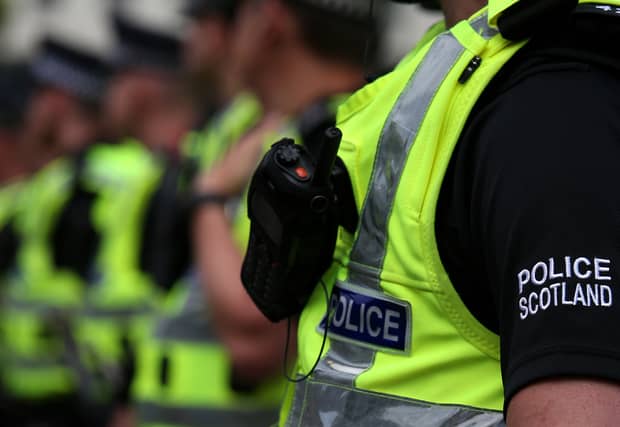

Police Scotland has warned the levels of service it provides to the public in some areas will reduce, as a leading officer said “hard choices” were being made to “maintain effective policing within the funding available”.
Interim deputy Chief Constable Alan Speirs spoke out as a new report revealed how the time taken by the force to answer non-emergency calls to the 101 number had increased by almost three-and-a-half minutes.
There was a “deprioritising” of these calls as the force saw the number of emergency 999 calls it received in the period April to June this year increase by 25.2%
Over the three months, Police Scotland received 598,666 calls, including a total of 231,688 emergency 999 calls – with this up from 185,110 over April to June 2022.
The force’s latest performance report said: “Police Scotland aim to achieve an average speed of answer for 999 calls within 10 seconds, a target also required by all 44 UK forces.
“Over the last five years, Police Scotland have maintained an average speed of answer under 10 seconds. However, due to the increase in 999 call volumes this has recently become increasingly challenging to sustain and only being achieved by de-prioritising non-emergency 101 calls.”
In April to June 2023 the average time the force took to answer a call to 101 was seven minutes 38 seconds, up from four minutes and nine seconds in the same period in 2022.
“This increase is partly due to the deprioritising of non-emergency 101 calls in order to sustain the increasing challenge of 999 call volumes,” the report added.
With a “real-term reduction in funding” being faced by Police Scotland in the coming year, the report said the force would be “seeking to refine our service”.
Watchdogs at the Scottish Police Authority (SPA) have already acknowledged that “in the current economic climate, with reduced budget, reducing resources and increasing demand, it is likely that policing performance will be impacted”, the report added
With officers dealing with “increasing call volumes and levels of crime”, Police Scotland said its response would have to be “more tailored towards the areas of highest threat, risk and harm”.
However, it said this “has an effect on our performance in other areas such as acquisitive crime”, as well as on proactive work by officers.
The detection rate for non-sexual crimes of violence, meanwhile, fell to 56.5% in the period April to June 2023, the report said, a drop of 7.8 points from the same time last year and 13.8 points lower than the five-year average.
It detailed how the number of recorded violent crimes had “increased from last year and is at the highest level in recent years”, with offences rising from 16,451 in April to June 2022 to 17,261 in the same period this year.
Sexual crimes recorded by the police also increased, from 3,692 to 3,930 over the same period.
Mr Speirs said the report covered a “challenging time for policing in Scotland”, adding that “those pressures will continue”.
He stated: “Our funding allocation for this year represented a real-terms reduction, meaning we have been required to reduce the number of police officers we have from 17,234 to around 16,600.
“At the same time, policing is asked to respond to increasing and increasingly complex community and individual needs. This is evidenced by a higher number of calls to Police Scotland, around 600,000 during the reporting period, with over 420,000 incidents recorded.”
He stated: “Hard choices are being taken to maintain effective policing within the funding available and action is being taken to achieve savings.
“Areas which encounter the greatest demand and which carry the greatest risk in keeping people safe are being prioritised for resources to ensure policing continues to address harm and protect the vulnerable.
“What we do may take longer or may need to be done differently, and the levels of service we provide to the public relating to some issues will reduce.”
While Mr Speirs said the challenges facing the force should “not be underestimated”, he added the report showed “effective policing that continues to be provided for our communities right across the country day in, day out”.
He stressed the 17 homicides reported in April to June 2023 had all been detected, saying this continued “Police Scotland’s exceptional performance and commitment to the families of victims in this area”.
Scottish Conservative justice spokesman Russell Findlay said: “Scotland’s streets are less safe under Humza Yousaf’s weak SNP.
“It will come as no surprise to police officers and the public that crime, including violent offending, continues to soar given the SNP’s slashing of policing budgets.”
He added that the “severe cuts” from the Scottish Government had “left hardworking officers without vital equipment and forces them to do their jobs with one hand tied behind their back”.
Justice Secretary Angela Constance said: “Our police perform an essential role keeping Scotland’s communities safe, which is why we are investing £1.45 billion in policing in 2023-24, increasing the resource budget by 6.3%, an additional £80 million, despite difficult financial circumstances due to UK Government austerity and our fixed budget.
“We fully recognise the hard work and valuable contribution officers make, and this week a fair pay deal amounting to a 12% increase over two years was agreed – meaning officers in Scotland continue to be the highest paid in the UK.
“Scotland continues to have more police officers per capita than England and Wales, with more than 350 officers than in 2007 – and recorded crime is at one of its lowest levels in nearly 50 years.”