
Red Arrows and raging bulls – the Commonwealth Games opens in Birmingham
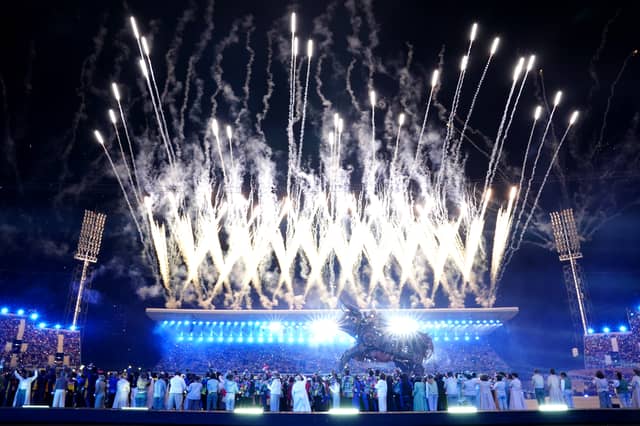

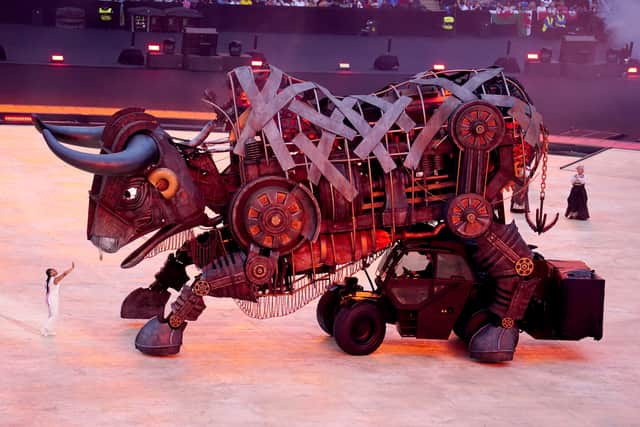
Red Arrows and raging bulls rumbled around Alexander Stadium on Thursday night as a Commonwealth Games that many claim faces a continuing fight to retain its relevance amped up the volume and belted a bold declaration of its intent to preserve its voice.
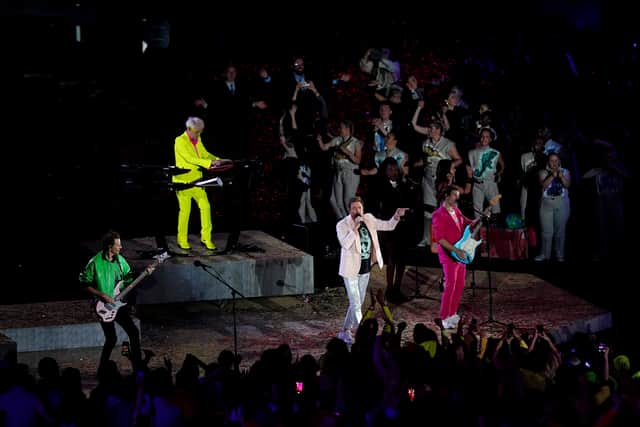
Against a Brummie musical backdrop ranging from Black Sabbath guitarist Tony Iommi to eighties new wavers Duran Duran, the first Games to be staged in England since Manchester in 2002 arrived amid a deafening chorus of calls for change both on and off the track.
Just like the creaking sexagenarians who brought the ceremony to a rousing close, the Commonwealth Games has had more than its fair share of hits and misses since; problems made all the more palpable since the Gold Coast in 2018 by the respective decisions of Barbados and Jamaica to remove the Queen as their head of state.
Yet the tiresome narratives of relevance and relative mediocrity which trail after the Games like aerobatic jet plumes obscure a central point that the Birmingham 2022 opening ceremony exhibited with such eloquence: the so-called ‘Friendly’ Games is better placed than ever to confirm its status as a real catalyst for change.
Sexagenarians excepted, Birmingham is a young city, with almost 40 per cent of its population under the age of 25, and from the stadium’s street art-inspired backdrop to the rousing call for the rights of all girls to education from 25-year-old activist Malala Yousafzai, it felt like a night designed to cut through to its most precious demographic.
Kids will clutch tickets to venues like the NEC and the Birmingham Arena in the next 10 days, or watch the action unfolding on television, entirely unconcerned that split times are a shadow of those seen at the recent World Championships, or that gymnastics apparatus scores compare unfavourably with the towering decimals recorded in Tokyo.

The Commonwealth Games has also positioned itself to lead the way on different kinds of diversity. Birmingham will be the first Games to award more medals to women than men, and it will also feature an unprecedented degree of integration between disabled and non-disabled athletes.
As the ceremony drew to a close, Tom Daley proudly emerged flanked by Pride flags as one of six final torch-bearers to enter the stadium, each of whom represented a different cause or under-represented minority that is closest to their heart.
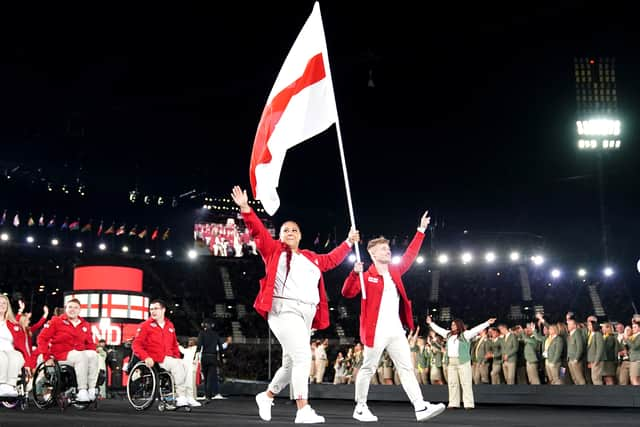
In an increasingly jam-packed sporting calendar, the fight for attention has never been greater. With the mighty Lionesses preparing to pounce this weekend, even England’s netball and women’s hockey stars face stiff competition as they embark on quests to replicate their recent successes.
The absence of Dina Asher-Smith through injury is an obvious blow for Games organisers, but newly-crowned 1500m world champion Jake Wightman, clad in Scotland’s colours, will bring plenty of star quality to a track programme which will conversely feature its usual array of much-lapped middle-distancers.

Beach volleyball players from nations whose sand is being lapped away with global warming, lawns bowlers from islands whose inhabitants boast of being direct descendants of Bounty Mutineers, road cyclists who – if history is to be repeated – seem bound to find themselves haplessly entangled within Spaghetti Junction.
All will be equally welcome at a Games that should be seen as a 10-day diversion from the problems that afflict a far greater portion of the world than the 72 Commonwealth federations represented in Birmingham.
Enjoy it while it lasts and to paraphrase Duran Duran, save your prayers for the morning after.