
Second set of giant panda cubs arrives at Berlin Zoo


Berlin Zoo has announced that long-time resident giant panda Meng Meng has given birth to twins — for a second time.
The cubs were born on Thursday and are doing well, the zoo said in a statement.
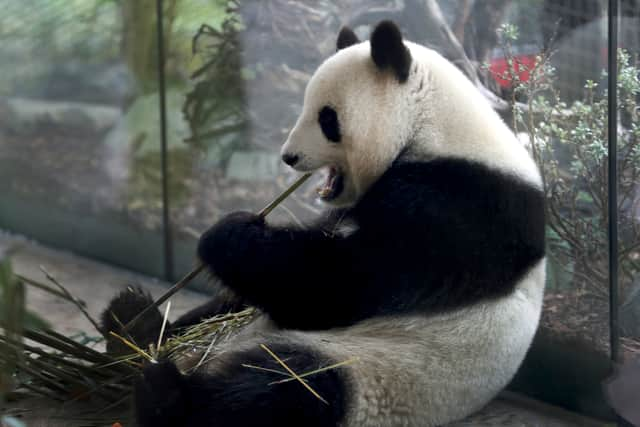
Their sex has not yet been determined “with certainty”.
“Now it’s time to keep your fingers crossed for the critical first few days,” the zoo said.
The cubs weigh just 6oz and 4.8oz and are about 5.5in long.
As with other large bears, giant pandas are born deaf, blind and pink. Their black-and-white panda markings only develop later.
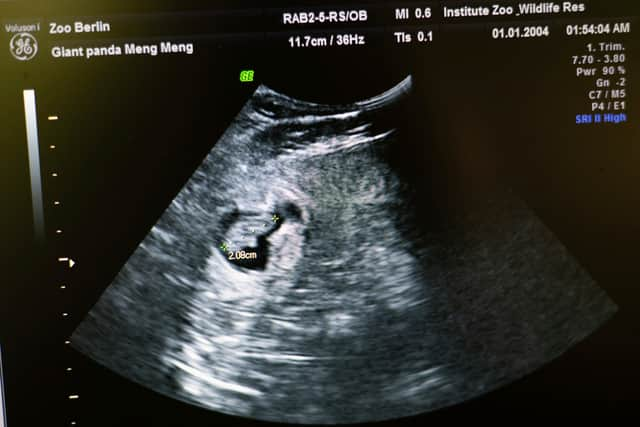
The zoo said giant pandas usually only raise one cub when they give birth to twins, so it will “actively support” Meng Meng in co-operation with two experts from China’s Chengdu Research Base of Giant Panda Breeding who are in the German capital.
“With around 20 births a year, they have much more experience and are better able to assess development,” panda curator Florian Sicks said.
The cubs will alternate being with their mother every two to three hours to drink milk and are otherwise being cared for in an incubator donated by a Berlin hospital.
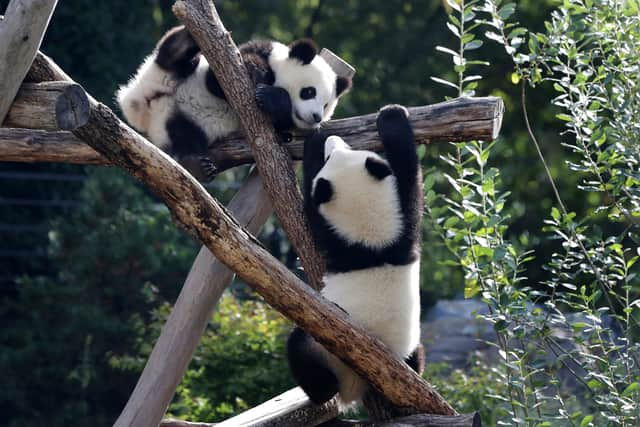
The twins were a star attraction in Berlin, but they were flown to China in December — a trip that was contractually agreed from the start but delayed by the Covid-19 pandemic.
China gave friendly nations its unofficial mascot for decades as part of a “panda diplomacy″ policy. The country now loans pandas to zoos on commercial terms.
Giant pandas have difficulty breeding and births are particularly welcomed. The zoo noted that female pandas are only fertile for about 72 hours per year.
There are about 1,800 pandas living in the wild in China and a few hundred in captivity worldwide.
Meng Meng was artificially inseminated in March.
The new arrivals and their mother will not be on show to the public for the time being, but visitors can still see Jiao Qing, 14, as male pandas do not get involved in rearing cubs.