
Time capsule that appeared to contain only silt yields centuries-old coins
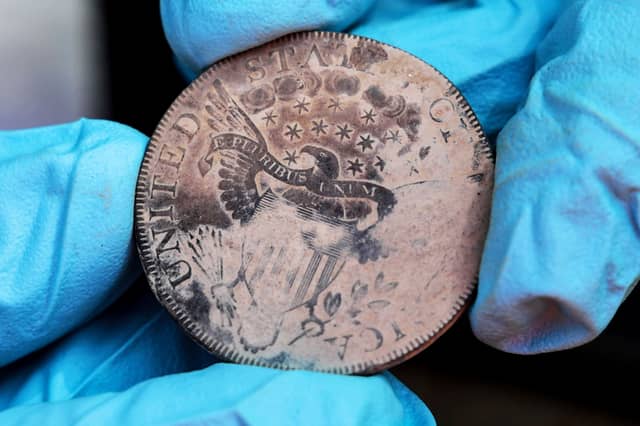

A nearly 200-year-old West Point time capsule that appeared to yield little more than dust when it was opened during a disappointing livestream contained hidden treasure after all, the US Military Academy has said.
It was just more hidden than expected.
The lead box believed to have been placed by cadets in the base of a monument actually contained six silver American coins dating from 1795 to 1828 and a commemorative medal, West Point said in a news release.
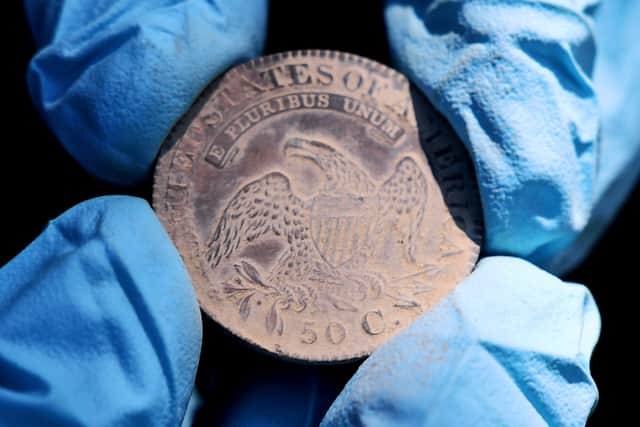
“When I first found these, I thought, man, you know, it would have been great to have found these on stage,” said West Point archaeologist Paul Hudson, who after the event, took the box back to his lab and began carefully sifting through the silt with a small wooden pick and brush.
“Before long, lo and behold, there’s the edge of a coin sticking out,” he recounted by phone, “and I thought, well that’s OK. That’s something, that’s a start.”
He said he was as disappointed as anyone by the underwhelming results of the live opening, which brought comparisons to Geraldo Rivera’s televised 1986 unsealing of a Chicago hotel vault purportedly belonging to gangster Al Capone, which famously revealed nothing but dirt.
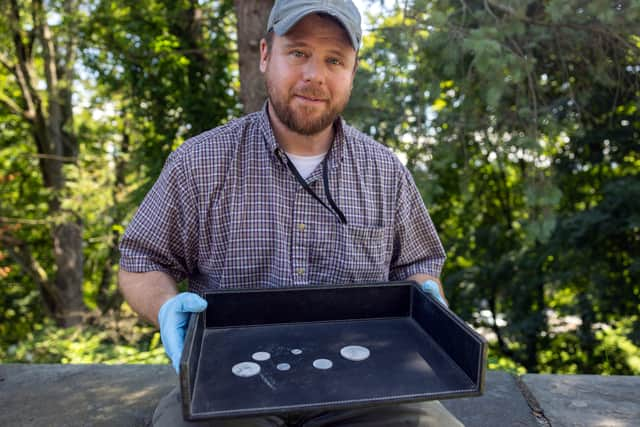
It was probably better to extract the coins and medal in a controlled setting anyway, said Mr Hudson, who still plans to analyse the sediment for more clues about what else may have been inside.
It appeared that moisture and perhaps sediment seeped into the box from a damaged seam.
The conditions also could have disintegrated any organic matter inside, like paper or wood.
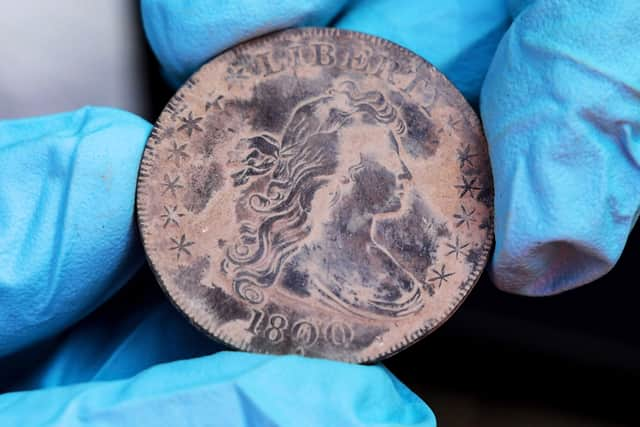
There was also an Erie Canal commemorative medal dating to 1826.
The finds seem to confirm academy officials’ theory that the box was left by cadets in 1828 or 1829, when the original monument, which honours Revolutionary War hero Thaddeus Kosciuszko, was completed.
A committee of five cadets that included 1829 graduate Robert E Lee, the future Confederate general, was involved with the dedication of the monument.
Kosciuszko had designed wartime fortifications for the Continental Army at West Point.

A statue of Kosciuszko was added to the monument in 1913.
The historical preservation and analysis of the time capsule will continue.
“I think there’s more that we can learn from this,” Mr Hudson said, “to learn about the academy’s history and about the country’s history.”