
UK to see hottest day on record with melting 40C temperatures predicted


Britons are set to melt on the hottest UK day on record as temperatures are predicted to hit 40C amid growing travel chaos.
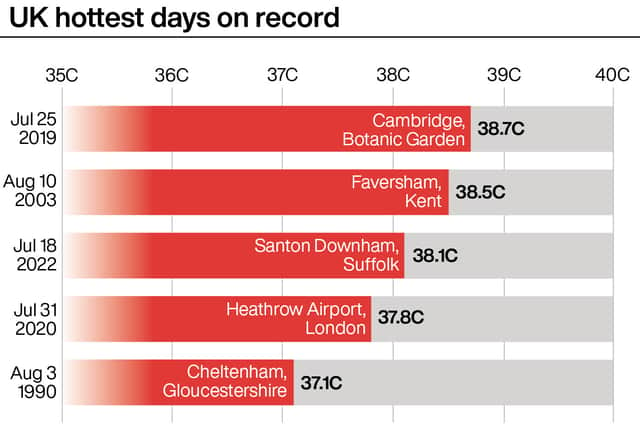
It comes after the mercury peaked at 38.1C in Santon Downham, Suffolk on Monday, making it the hottest day of the year and the third hottest day on record, after 38.7C in Cambridge in 2019 and 38.5C in Faversham, Kent, in August 2003.
Rachel Ayers, a Met Office forecaster, told the PA news agency: “Overnight it’s going to stay very warm so expect a difficult night of sleeping.
“We then have a pretty unprecedented day tomorrow, the temperature will be very hot throughout the day, before rising as high as 40C, maybe even 41C in isolated spots across England during the afternoon.
Scotland and Wales could also see their hottest days on record.
The Met Office is warning that temperatures overnight into Tuesday are holding up in the low 20s and possible mid-20s in isolated places, and it looks likely to be the warmest night on record in the UK.
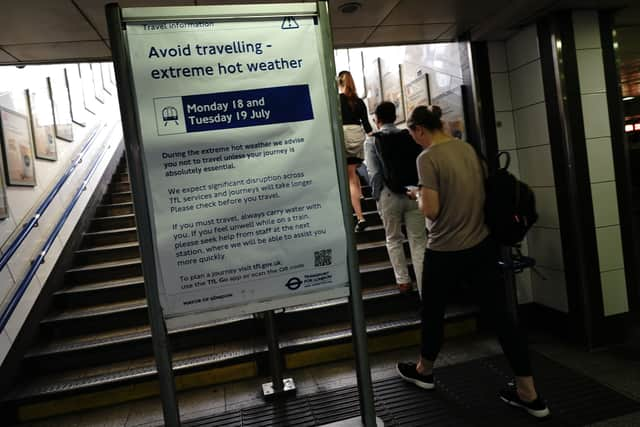
Most routes across England and Wales will be affected by the hot weather on Tuesday, according to National Rail, with customers told only to travel if “absolutely necessary”.
Ms Ayers added: “There are likely to be delays on roads, with road closures, as well as possible delays and cancellations to trains and maybe issues with air travel.
“This could pose a significant health risk to those stuck on services or roads during the heat.”
There will be no Thameslink or Great Northern trains running in any location north of London, from London Blackfriars via St Pancras, or from London King’s Cross or London Moorgate on Tuesday.
Merseyrail said the number of trains running and journey times will be “seriously affected”, with some routes closed completely.
Southern, South Eastern, South Western Railway and Great Western Railway are among the dozens of train companies running significantly reduced services across the country.
Transport for London (TfL) said London’s rail network would also be running a reduced service on Tuesday due to safety restrictions put into place to deal with the heat.
Elsewhere, council gritters were on stand-by to spread light dustings of sand on melting roads.

The Department for Environment, Food and Rural Affairs (Defra) has a high pollution alert in place in the eastern parts of England and the East Midlands, meaning EU ozone pollution thresholds have been exceeded.
It comes as a 14-year-old boy is missing and believed to have drowned on Monday afternoon after getting into difficulty in the Thames in Richmond, west London.

Emergency services and the Government have reiterated urgent warnings about the dangers of trying to keep cool after several tragedies in waterways and reservoirs during the heatwave.
It came as the family of 13-year-old Robert Hattersley said they were “absolutely devastated” after he died when he got into trouble in the River Tyne in Northumberland on Sunday.
There have been warnings of pressures on hospitals from the extreme temperatures, and concerns ambulance services would face rising numbers of calls as the heat peaks on Tuesday afternoon.
The UK Health Security Agency has issued a level 4 heat-health alert – described as an “emergency” – and the UK is under its first red extreme heat warning for a large part of England, issued by the Met Office.

There are also warnings of wildfires, with people asked not to use barbecues or leave litter that could spark fires in the countryside – while zoos and wildlife parks were closed to protect animals, staff and visitors.
Water companies have been experiencing “unprecedented peak demand”, with people encouraged to “carefully consider” their water usage and urged not to waste it.