
Risk of losing entire generation of Palestinian children without mental health support
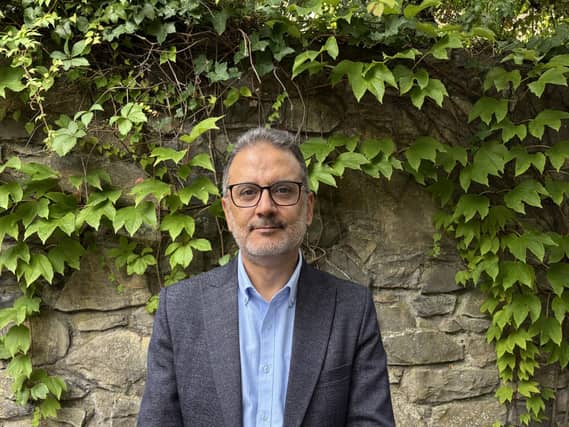

Dr Yasser Abu-Jamei said young people who are left without proper mental health support will be miseducated and lead to inter-generational trauma.
There is a risk of losing an entire generation of Palestinian children who are not being provided with the right mental health support to deal with their trauma, a psychiatrist who runs the biggest mental health charity in Gaza has said during a visit to Dublin.
Dr Yasser Abu-Jamei, who provides counselling services to Palestinian children, said young people who are left without proper mental health support will be miseducated, and could lead to inter-generational trauma.
Despite the declaration of a ceasefire in the Gaza strip last October, Israel continues to violate the agreement with frequent attacks, forcing the displacement of Palestinians and intensifying the trauma, particularly on its 1.2 million children.
Dr Abu-Jamei said that all children living on the Gaza Strip are being exposed to a lack of food and traumatic events, which has led to the development of mental health symptoms.
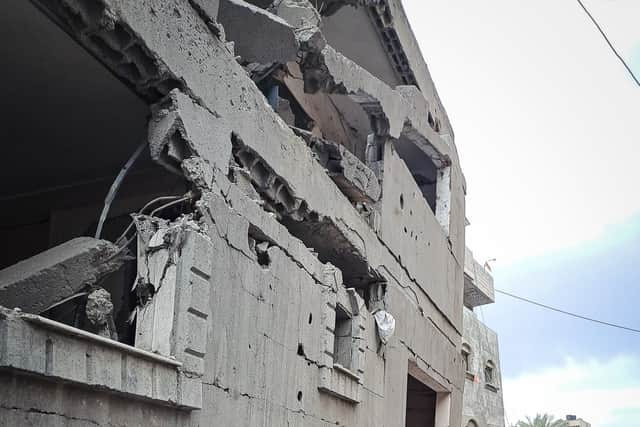
Dr Abu-Jamei, a Palestinian psychiatrist and director of one of Trócaire’s partners in Palestine, the Gaza Community Mental Health Programme (GCMHP), said that some 90% of the population live in displaced areas.
He is also a member of the task force that developed Palestine’s National Mental Health Strategy 2015-2019, and is in Ireland for a number of political and public events.
He currently lives in Italy doing a PhD about mental health interventions in areas of atrocities, including Gaza.
“I used to live in Gaza Strip, and in April 2024, I left about six months into the beginning of the genocide,” he said.
“For people living there, there is the continuous feeling of threat to their lives.”
The GCMHP organisation is helping to treat thousands of people in community centres, with members offering support to people living in tents and shelters.
“The psychological impact of two years of continuous exposure to traumatic events hasn’t really stopped because the traumatic events continue to happen,” he added.
“On one hand, the traumatic events continue to happen, and the other hand, the resources that are needed for the recovery of the population are not there.
“When you look at the mental health aspects of the population, people are still continuously experiencing exposure to traumatic events. That’s on one hand.
“The other hand, there is multiple losses of property, of the lives of loved ones, the loss of a dignified, safe place to live in. Basic resources are not there, even when it comes to water, even when it comes to the capacity to have a shower every day.
“Fourth, the very basic needs, even for children, are not there.
“Not only safety, but also, for example, education. Now they say that we are resuming education after three years, but in reality, they are doing that in tents that are not equipped to facilitate an education system.
“Fifth, we don’t see really any change in the future, whether that’s political, which means that it will influence positively the lives of people, and that means that the psychological suffering will continue to be there, and unfortunately, the support to mental health well-being of the population is all the time not given the needed priority.”
Dr Abu-Jamei is in contact with colleagues and people living in Gaza through social media as well as Zoom and Teams meetings.
Speaking about the importance of Palestinians receiving the right mental health support, the doctor said it is vital to the recovery plan in a post-disastrous area.
“Our children have been exposed to first depletion of food, and then starved, and that’s well documented,” he added.
“Some children didn’t only stop growing physically, but they were also losing weight, and then those children were exposed to traumatic events.
“They were hearing the bombardment.
“Many of them developed symptoms like, for example, bedwetting, night terrors, night horrors, nightmares.
“Some of them were sleep walking. Some of them have negative coping strategies. For example, they become more angry, they become more frustrated, they become more aggressive.
“Imagine a child whose daily task is not to play, is not to go to school, but it’s to carry water from the water distribution point to the tent, and he or she will do it several times per day, carrying heavy pots that they shouldn’t be carrying in the first place.
“As a show of resentment of the realities, children tend to become aggressive, and that aggression needs also to be treated, need to be dealt with, and then the question is: the sooner you intervene, the better you can really deal with it.
“Those children who are not going to schools for almost now three years, can we send them back to schools, even though schools are tents?
“Can we really help them again gain skills? Can we help them again become disciplined and then receive education, and then go on with their lives and recover? Or do we just leave them without support, which means that they will become miseducated, which means that we are not only losing a generation, but it will be losing other generations?
“Not only because of the traumatic events and the recollections of the traumatic event, but also because of the implications of other things that were happening around the trauma.
“We know, it’s proven scientifically, that trauma is a transgenerational one.
“It’s proven across different cultures, different circumstances.”
He said that mental health interventions should be one of the main components of any recovery plan for the Gaza Strip.
“Unfortunately, from previous experiences, I know that mental health is not given that priority,” he added.
“That’s why we continue to travel around to speak (about) what really happens in Gaza, the reality of the population, how people spend their days, and at the same time, to tell supporters, to tell donors, to tell civil society groups, and speak about the importance of prioritising the services.”