Search


30 Mar 2026
Search
30 Mar 2026

Please allow ads as they help fund our trusted local news content.
Kindly add us to your ad blocker whitelist.
If you want further access to Ireland's best local journalism, consider contributing and/or subscribing to our free daily Newsletter .
Support our mission and join our community now.
To continue reading this article, you can subscribe for as little as €0.50 per week which will also give you access to all of our premium content and archived articles!
Alternatively, you can pay €0.50 per article, capped at €1 per day.
Thank you for supporting Ireland's best local journalism!


A new device for remotely checking the wellbeing of prison inmates could help tackle the growing number of deaths in custody, the team developing it has said.
The technology, known as VisionRF, uses low-power radar to identify subtle chest movements, enabling staff to check on an individual’s breathing and heart rate from several metres away.
Researchers said the device can be mounted discreetly in a cell, such as behind a light fitting, and that it operates autonomously, alerting prison healthcare teams or officers only when a person’s heart rate, breathing pattern or movement becomes irregular.
They said this provides a discreet alternative to the distressing physical checks that are standard during suicide prevention protocols.
The technology is being developed by a team at Heriot-Watt University, led by Dimitris Anagnostou, associate professor at the university’s Institute of Signals, Sensors and Systems.
“The need for safer, more compassionate means of supporting healthcare in custody settings is critical,” he said.
“Our aim is to provide a solution that allows early intervention during health emergencies, without adding to distress or stigma.
“VisionRF can detect serious changes in vital signs quickly and accurately, helping staff respond before a crisis escalates.”
The development comes as the number of deaths in Scotland’s prisons continues to rise, with 64 people dying in custody in 2024/25 – the highest annual figure in more than a decade, and a 60% increase on the 40 deaths the year before.
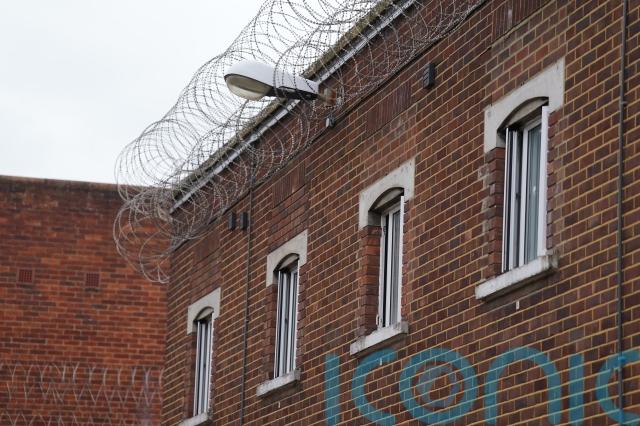
Of those who died, 16 were recorded as suicides, with seven still pending the outcome of investigations.
Meanwhile in England and Wales there were 401 deaths in prison custody in the year to June 2025, an increase of 30% from 308 deaths in the previous 12 months.
Of these, 86 deaths were self-inflicted. In the 12 months to March 2025, the number of individuals who self-harmed reached 13,824.
The team said current prevention strategies, like safer cells and regular overnight observations, are often distressing for the individuals who are being monitored, because frequent overnight checks can disrupt sleep and exacerbate mental health issues.
They said with no cameras, microphones or wearables, the VisionRF is designed to prioritise privacy and dignity in secure environments, where healthcare surveillance can otherwise be intrusive or unsettling.
Professor Nancy Loucks is chief executive of the charity Families Outside, which supports families that are affected by imprisonment.
“With the death rate in prison higher than ever, such technology can reassure families that their loved one’s safety is being monitored,” she said.
“The earlier response technology of VisionRF can help prevent deaths from suicide, as well as those related to substance misuse and natural causes.
“This will be reassuring for prison staff as well, who can be traumatised by the death of someone in their care.”
The Heriot-Watt team said the device’s low-power and low-cost design also makes it suitable for wider rollout beyond the prison estate.
They are currently developing a roadmap to “spin out” the technology commercially, with future applications for families delivering at-home care, in nursing and care homes, as well as other community healthcare settings.
Dr Anagnostou went on: “We are not replacing existing care, but we are significantly strengthening it.
“VisionRF allows staff to assess wellbeing from a distance, without disrupting the person being observed. It respects their privacy while helping to prevent a tragedy.”
He added: “People in the care of the prison service face some of the most severe health inequalities in the country.
“If we can prevent even one life being lost, this technology will have been worth it.
“But we believe it has the potential to do much more, not just in prisons, but across other areas of health and social care.”
The project has secured funding from the National Institute for Health and Care Research (NIHR) through its Thrive programme, which supports healthcare innovations with potential to address significant health inequalities.

Subscribe or register today to discover more from DonegalLive.ie
Buy the e-paper of the Donegal Democrat, Donegal People's Press, Donegal Post and Inish Times here for instant access to Donegal's premier news titles.
Keep up with the latest news from Donegal with our daily newsletter featuring the most important stories of the day delivered to your inbox every evening at 5pm.

This publication supports the work of the Press Council of Ireland and Office of the Press Ombudsman, and our staff operate within the Code of Practice of the Press Council. You can obtain a copy of the Code, or contact the Council, at www.presscouncil.ie, Lo-call 1800 208 080 or email: info@presscouncil.ie.