
Family of Derry man killed by army seeking fresh inquest
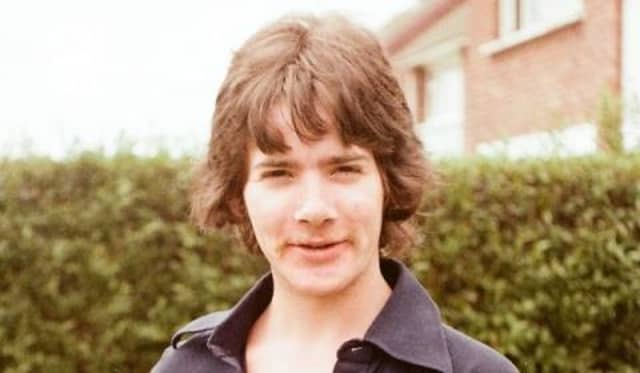

Denis Heaney (21) was shot by under-cover soldiers of the British army’s 14 Intelligence Company on June 10, 1978.
The brother of a Derry man killed by the British army has accused the British Government of acting in bad faith by failing to repeal the 2023 Legacy Act.
Séamas Heaney’s brother Denis (21) was shot by under-cover soldiers of the British army’s 14 Intelligence Company on June 10, 1978.
Denis had been walking up Harvey Street in the city to meet friends in the Rocking Chair bar at the top of Waterloo Street.
His family has this week written to British Secretary of State Hilary Benn seeking a new inquest for their brother.
The Legacy Act introduced a ban on inquests and civil actions for all Troubles related deaths, replacing them with the controversial Independent Commission for Reconciliation for Information Recovery (ICRIR).
Although the repeal of the Act was contained in the legislative programme laid out by the Labour Party at the beginning of this parliamentary term, Hilary Benn subsequently decided to retain the ICRIR.
His decision came in the face of widespread opposition in the North and the Irish Government’s inter-state legal challenge against the Legacy Act in the European Court of Human Rights.
Speaking to The Derry News, Séamas said: “Everyone, from a victims’ point of view, across the board, was really elated when the British Labour Party said it was going to repeal the Act.
“We were glad because the Legacy Act was introduced in order to ‘wipe the slate clean’ as far as the British state was concerned.
“Our family thought we still had a case to which we wanted answers, so it was very demoralising to be told after years of searching for the truth, we had no recourse to a new inquest or civil action because of the Legacy Act was going to remain.
“We are now in our 46th year of looking for the truth around Denis’s killing. It has been a very demoralising journey for us and a very traumatic one as well, to be honest.”
To that end, the Heaney family has been through what Séamas described as “various processes” which proved “inconclusive” including Denis’s initial inquest in 1979 and a civil action taken by his parents, Denis (Sr) and Eilis, in 1985.
“We then went through the Historical Enquiries Team (HET),” said Séamas. “It was on the point of making a report when the HET collapsed in 2014. That report was never released to us.”
The HET had commissioned an independent forensic review of the findings of Denis’s autopsy which concluded the bullet wounds indicated Denis had been struck in what he termed “a shored position” - they were all following the same trajectory.
“That could only have been the case if Denis was in a fixed position,” said Séamas, “and yet, in the civil action my parents took, the soldier said Denis was facing them, pointing a gun at them when they opened fire.
“The fact is, all five bullets that hit Dennis hit him in the back while he was lying on the ground.”
Denis Heaney had been arrested several weeks earlier and while he was in Strand Road Barracks an RUC Special Branch officer threatened him.
According to Séamas, his brother was told: “Don’t f*****g worry, you’ll be got. We’ll stiff you the first chance we get.”
The family reported the threat to the relevant authorities at the time.
Séamas added: “The Chief Constable office then took control of Dennis’s HET report. We wrote to successive Chief Constables, three in all, asking for the forensic evidence to be released to us and they refused because it was still an ‘open investigation’.
“I just think that is ridiculous after all this period of time. The HET report gives us an opportunity to go back with quite compelling evidence for a new inquest. In 1979, the coroner had no option but to return an ‘open verdict’ because the statements of the British soldiers were rejected as they were not present to be cross examined.”
Séamas said it was “ironic the Legacy Act meant the British Government had become the sole arbiter of truth.”
He added: “The British Secretary of State, based in Westminster, is the only person with power in this case. No one in the north of Ireland has any say in the who, what, where and when of this.
“He can at any point in the future pull the plug on the whole thing without having to give reasons for doing so, that is all outlined in the Act.
“In terms of the ICRIR, Commissioner Declan Morgan is compromised because of his previous position as Lord Chief Justice. Equally Peter Sheridan, the Commissioner of investigations, a former RUC officer with oversight of Special Branch, is compromised.
“As a family, we are determined and we are prepared to take this as far as it goes. We also have another generation which is determined coming up behind us.
“If we don’t win this round, they will take that fight forward. We have no shortage of people who will take that fight forward.”