


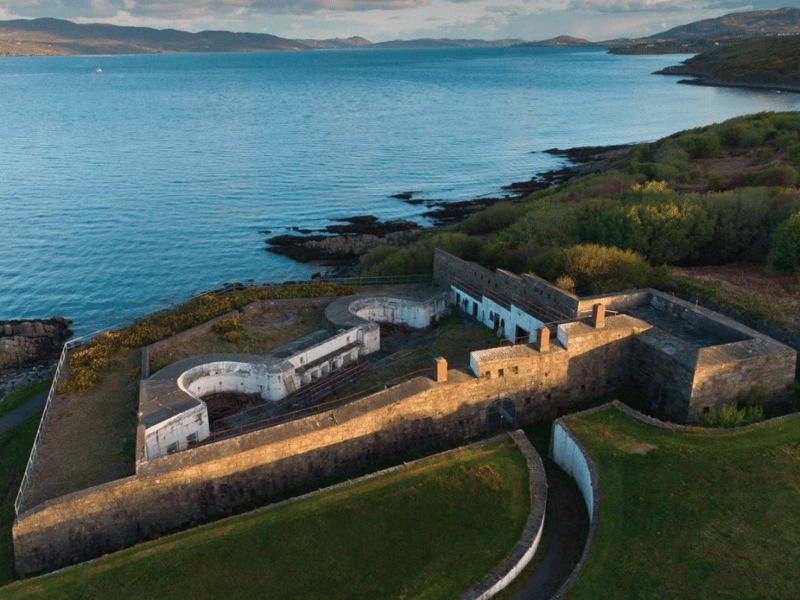
5.
Ned's Fort: Another of the Napoleanic forts along Lough Swilly, Neds Point is near Buncrana and even though you can't go inside it is still worth a visit. It looks like there might be some works in the pipeline to make it open to the public again, which I hope happens as I'd love to get a look inside.
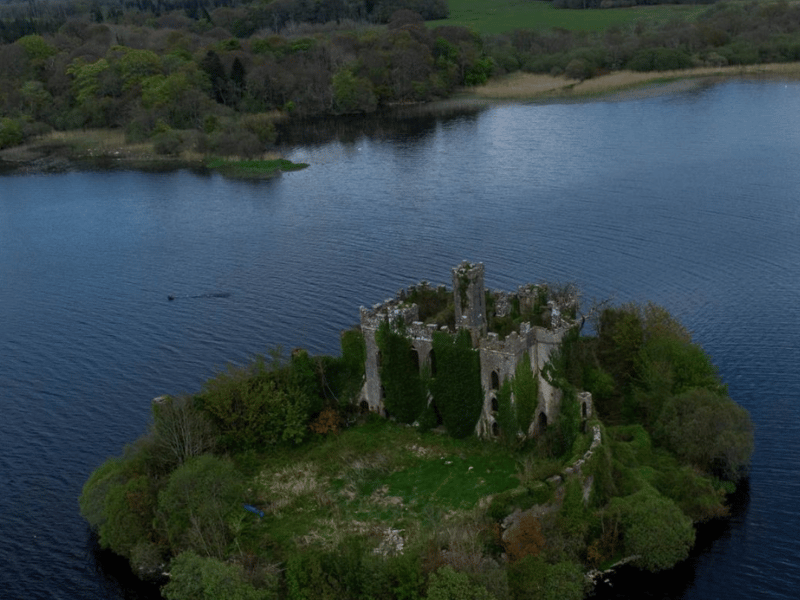
6.
McDermott's Castle: The castle is really old, said to be from at least 1184, and has been involved in numerous battles, but was destroyed in a fire from a lightning bolt about 200 years ago. Local legend tells of a girl called Una, daughter of the McDermott chief, who fell in love with boy her father deemed was 'lower class'. Una's father refused to let her leave the island in the hope that it would end the relationship but the boyfriend began swimming across Lough Key to reach the castle and during one such trip tragedy struck and he drowned. Una is said to have died from grief and the two are said to be buried under two intertwined trees on the island ever since.
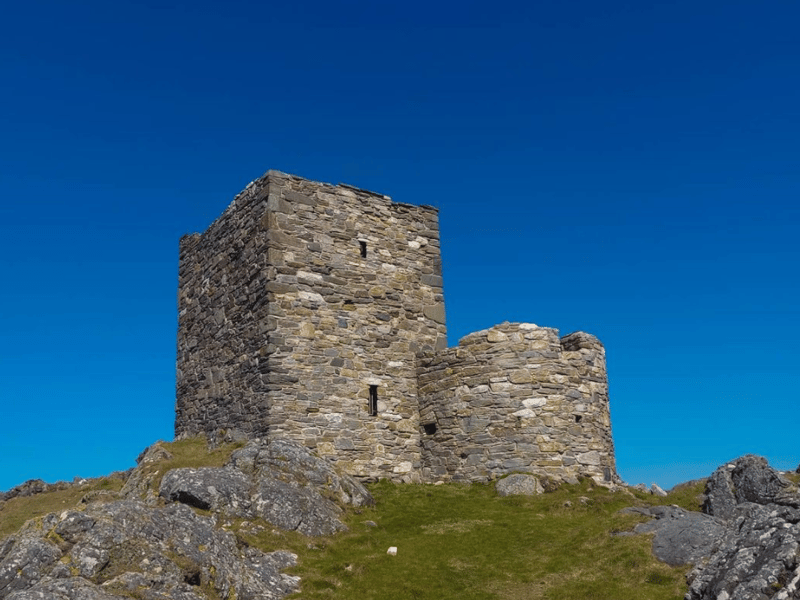
7.
Carrickabraghy Castle: Near Ballyliffen, made up one of the three tuatha, or kingdoms of Inishowen, and was held by Conall Gulban, son of Niall of the Nine Hostages, who himself was famous for kidnapping a young St Patrick from Wales and taking him to Ireland. Inishowen means Eoghans Island, with the Eoghan in question another of Niall's sons. A castle has been in the area since at least the 800s and was mentioned in the Annals of the Four Masters, with the keep you see above being built in the 1600s but abandoned by 1665.
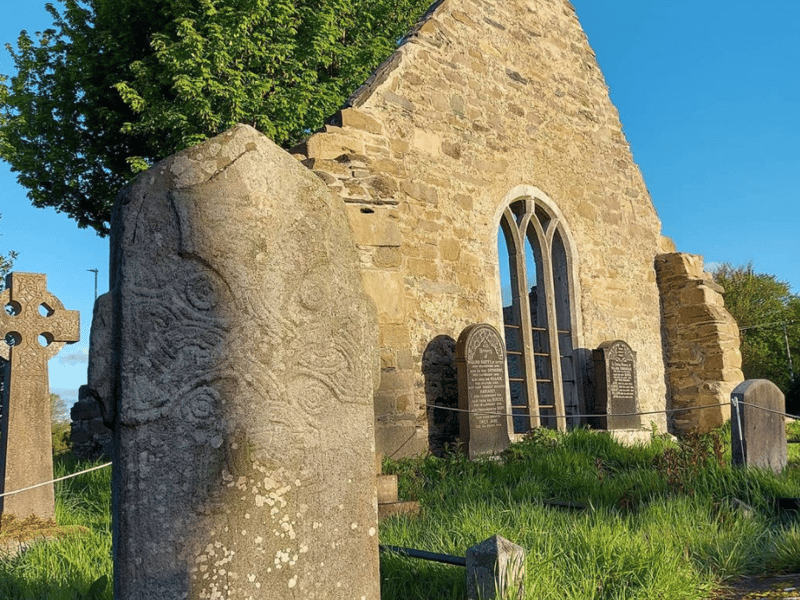
8.
St Mura's Celtic Cross: When St Colmcille founded an Abbey in Fahan in the 6th century St Mura was made its first abbot. St Mura died in 645 AD at the ripe old age of 95 and was buried here with a celtic cross marking his grave - the only celtic cross in Ireland to bear a Greek inscription, translated as "glory and honour to the Father, the son and the Holy spirit", a prayer that was just sanctioned by the council of Toledo in 633 AD. There are loads of graves dated from the 1600s so there's a lot of history here, and there is also a Horatio Nelson buried here who is thought to be the nephew of the Horatio Nelson who fought Napolean at Trafalgar.