
It Occurs to Me: Go rest high on that mountain


Growing up in Carrigart, Frank Galligan has a strong connection with Creeslough which in his youth was always 'over the road'. In his weekly column, he pays his own special tribute to those who lost their lives in last week's tragedy
The corn has been long cut in Creeslough,
The grey sheaves are all lying low,
The clouds have gone dark over Muckish,
And behind it, the sun’s lost its glow.
The wind from Sheephaven is crying,
As it birls around Umerafad,
The tongues in the Throat Lake are silent,
As they whisper their prayers to God.
The birds are no longer singing,
In the trees in Duntally Wood,
The sea below Ards is retreating,
The leaves near the Friary are dead.
But the ten red candles will flicker,
And light up the blackest of days,
And beads will entwine all the fingers
Of those lost in death's tangled maze.
Go rest high on that mountain,
Before you make your final flight,
The curtains will be pulled the length,
In Creeslough Town for many a night.
Growing up in Carrigart, Downings was down the road, Milford up the road and Creeslough over the road. Like all of you, my mind has been 'over the road' since last Friday. Doing my programme on Highland Radio on Saturday, I played Vince Gill's beautiful gospel song: ‘Go Rest High On That Mountain’. I thought of Muckish, always in our line of vision as youngsters.
Danny Lafferty senior, whose original shop I remember well, knew the names of every wean in the parish, and would often give them sweets when they would be in the supermarket with their parents.
The Song ‘Cutting the Corn in Creeslough today’ by Percy French, makes reference to Danny Lafferty’s father, also Danny, It's been said that while Percy French was on board a ship heading for either Canada or America, he overheard a conversation where a young man was trying to write a letter back home to Danny, and telling him of his heartbreak as he sailed away from Ireland.
The song opens with:
“Dear Danny… I’m taking the pen in my hand,
To tell you we’re just out of sight of the land,
In a big Anchor liner we’re sailing in style,
And we’re sailing away from the Emerald Isle.
A strange sort of sigh seems to come from us all,
As the waves hit the last bit of old Donegal,
Sure it’s good to be you that is taking your tay ,
Where they’re cutting the corn in Creeslough today.”
I’m sure many of you YouTubed Bridie Gallagher this week to hear her wonderfully evocative rendition.
BRIDIE GALLAGHER
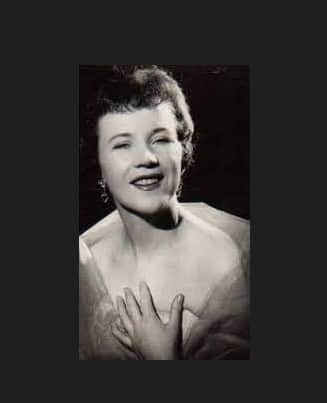
Bridie Gallagher
In a television programme broadcast about her life some years ago - Bridie died in 2012 - Daniel O'Donnell, said: ''I always say Bridie was the first from Donegal to pave the way for all of us that came after. And I would say anyone that you would talk to of the Donegal singers would say that because coming from Creeslough, or coming from where I come from, it's a world away from where we ended up.”
Another hugely successful Irish singer in the 1960s was Dec Cluskey of The Bachelors, who often performed on stage with Bridie. Dec also credited Bridie as being the breakthrough artist for Irish performers.
“We were in Ireland doing the ordinary shows like the Theatre Royal and the Olympia and the Gaiety and theatres like that in Dublin, we looked at Bridie and thought 'my God, that's what we aspire to do' and she absolutely opened the doors for all of us artists.
“And I think we shouldn't forget that she brought glamour to the Irish stage, she dressed like an international star and that was unheard of in Ireland at that time.''
In that legendary show at the Albert Hall, mounted police had to be used to hold back fans who blocked the surrounding streets. Former Belfast Telegraph showbusiness reporter, Eddie McIlwaine, recalled that audiences loved Bridie's style.
“I think what was unique about her career was that she brought a touch of magic and glamour to Irish show-business and she gave new life to so many Irish ballads which had either been forgotten or were seen as old-fashioned.”
Her son Jim said: “She had this thing about her, this quality that stirred audiences. She could get an audience going and swinging with her immediately because of that conviction she had in her own ability.
“She had a great confidence about her and she could swing into a song. When she first hit the big time it was quite a crazy life for a relatively young woman in those days who'd never been outside of Ireland.”
SEAMUS AND THE FAIR
It’s well over ten years ago, since I interviewed Seamus Harkin about his delightful memoir of growing up in Creeslough, “It Took A Lifetime”. Seamus was a wonderful character, known locally as ‘The Singing Undertaker’.
I was struck by the sad irony of that this week, as singing would have been far from his mind were he still with us. One of the reviews of his book said: “This book tells of a time in rural Ireland when life was uncomplicated and neighbours looked out for each other. A time when money and recessions were seldom talked about and self sufficiency was the norm.”
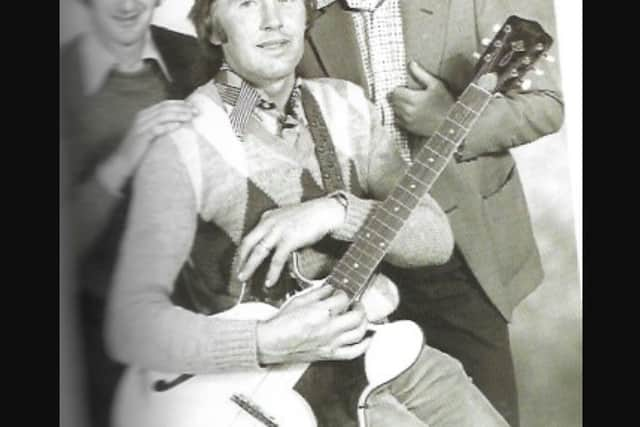
Seamus Harkin - a wonderful character
By the time I was growing up, the Creeslough Fair was fading. As new marts opened in Milford and Letterkenny the fair didn’t draw the big crowds it used to and by the 1960s the Creeslough fair was almost all gone.
But locals from around the area still continued for many years to come into the town on the 10th of each month to do their shopping or dealing. The original day was a hub of buying and selling of cattle, sheep, pigs, horses and chickens. With the best mart day for horses in February, cattle and sheep in May and August being the largest Fair - The Lammas Day Fair.

The Creeslough Fair
As James Johnston recalled in his poem: “Creeslough Fair”
“They came from Fanad, Glen and Castle Doe
From Cloughaneely and around Myroe;
From Ramelton and all along the Lennon
Letterkenny, Milford and Kilmacreenan
On horse, on foot, on loaded cart,
From Dunfanaghy, Faugher, Derryart
By the side of Muckish, past Creamsmear
They travelled in groups to the Creeslough Fair.”