
Swinney ‘would imagine’ public sector reforms will mean fewer high-paid staff

The First Minister has already set out plans to slash regional health boards from 14 to just two covering the whole of Scotland.
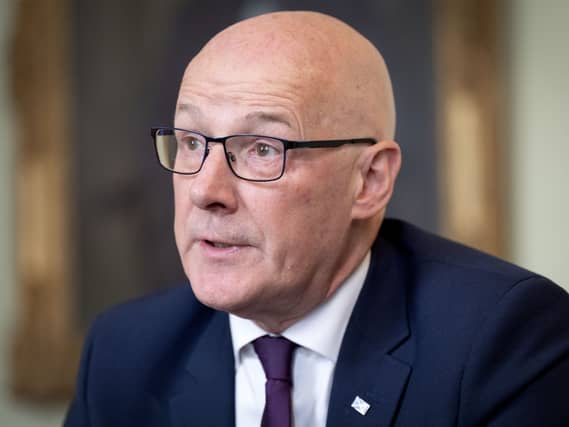
John Swinney said he “would imagine” major reforms to Scotland’s public services will result in fewer high-paid civil servants.
The First Minister again insisted there will be no compulsory redundancies as a result of proposals he outlined in his Programme for Government this week, which set out changes to health boards and Scotland’s councils.
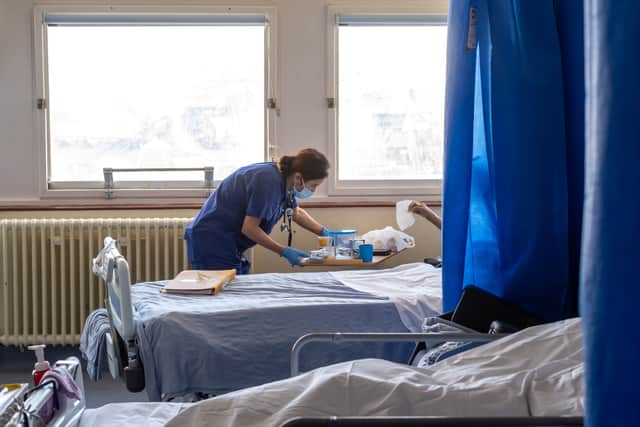
The SNP leader plans to reduce the number of territorial health boards in Scotland from 14 to just two.
The First Minister is also looking to create a new structure for local government, with Mr Swinney saying on Wednesday there should be “fewer” councils than the current 32.
Union leaders have already expressed fears the reforms will “inevitably result in swingeing cuts and thousands of job losses across the public sector”.
Speaking to journalists during a visit to Dundee on Thursday, Mr Swinney repeated his “commitment there will not be compulsory redundancies”.
But with the Scottish Government facing a budget black hole of almost £5 billion by the end of the decade, the First Minister was also clear that “there will have to a reduction in public sector employment”.
Pressed on whether that would mean fewer high-paid civil servants, he said: “I would imagine there would be.”
He said there is a “variety of ways” the public sector workforce could be reduced without compulsory cuts, but stressed this is “an important part of taking forward the reforms that we need to undertake”.
Mr Swinney said: “To ensure our public services better meet the needs of the public, and ensure they are sustainable, requires change. That is going to reduce the size of the public sector workforce.
“But the assurance I give is there will be no compulsory redundancies.”
His comments came as Stephen Boyd, director of the Institute for Public Policy Research (IPPR) Scotland think tank, warned expectations of what could be achieved by merging public bodies can be “wildly optimistic”.
Speaking to MSPs on Holyrood’s Public Service Reform Committee, Mr Boyd said: “Public service reform is likely to be the defining issue of this Parliament.
“Expectations of what can be achieved through, for instance, consolidation of public bodies can be wildly optimistic.
“Assumptions of how technology might reduce costs often fail to account for the intrinsic labour intensity of the services delivered by the public sector.”
Auditor General for Scotland Stephen Boyle said, meanwhile, that “the hardest part is probably yet to come” on public service reform.
While he said politicians had talked about such reform “for a long time”, there had not been significant work in this area since the creation of Police Scotland and the Scottish Fire and Rescue Service in 2013.
The Auditor General said: “What we have seen typically is more short-term measures that have absolutely helped balance the Scottish Government’s annual budgets, rather than fundamental changes to how services are delivered.”
He said the “need for reform and transformation of public services in Scotland so that they are sustainable, effective… has never been more important”.