
Be joyful - real wellness isn't about online fads


Do you remember when ‘looking after yourself’ was drinking flat 7Up when you had a cold? Or a bottle of crinkly, celophane-wrapped Lucozade if you were really sick. In bed and off school sick.
It’s fair to say in the (obviously many) years since this writer was a child the world of wellness has moved on a very long way. That we have the phrase ‘world of wellness’ is an indicator in itself. The world around us has even developed an extensive ‘wellness industry’ that seems to stretch its vines of influences into every area of life.
It’s easy to fall for the influencers who have managed to pick the one quirk of your health that resonates - do you feel sleepy after a coffee? (Yes!) Then you have undiagnosed ADHD. (Huh. Maybe I do…)
You see it once and you remember how convincing those snakeoil salesmen looked in old westerns. But scroll past them every day and you’re considering trying the trendy fruit/ herbal tea/ two ingredient bread that will solve all your issues. One cup of tea later and you have long, shiny hair, glowing, tanned skin and enough energy to build a new civilization, or something.
And this ‘new’ you can do all the things the ‘current’ you can’t - you’ll have the energy to look after everyone in your life, get all the housework done and still have time to bake that two ingredient magic bread.
Who wouldn't like to have that drive and energy?
Unfortunately, this ‘buffet of wellbeing’ can be overwhelming. Among the chaff there is wheat. But just because a food or therapy worked for someone else it might not be for you.
We have to go back to basics to life the better life we want. To give the best to our families and our own lives we need to be as healthy as we can.
Healthier people build better communities. But those who look after others can often be the first to forget to look after themselves. Parents trying to keep up with young children, or healthcare workers with many patients.
We have to look after ourselves first. And it’s not selfish to look after yourself so you can look after others.
Looking after yourself doesn’t just mean getting enough sleep, drinking plenty of water or eating your green vegetables… But, yes, it does also mean all that, and more.
And it can be much easier than complicated rituals and recipes from Instagram.
Wellbeing consultant Calodagh McCumiskey talks about the importance of getting back to basics and giving our bodies what they need. That being mindful and present is the foundation of wellbeing.
A former aid worker who experienced communities in post-war and catastrophe situations, Calodagh has observed that our lives now are so full, they have so much going on, that life here reminds her of what she saw when working in those disaster zones. People caught in a loop of stress.
In today’s world we are living a life we are not designed to live - we spend 80% of our time indoors, when, in comparison, ancestors spent that much time outside. We are not designed to spend five hours on the phone or sitting at a laptop.
If we want to have a good life we have to think ‘what is my day about,’ what are my intentions for the day.
She has some very good, and very simple tips to improve our sense of wellbeing.
We often hear the phrase ‘comparison is the thief of joy.’ Calodagh goes further to say the most meaningful comparison we can make is with ourselves, yesterday. Are we growing as people, are we following our plan or feeling better?
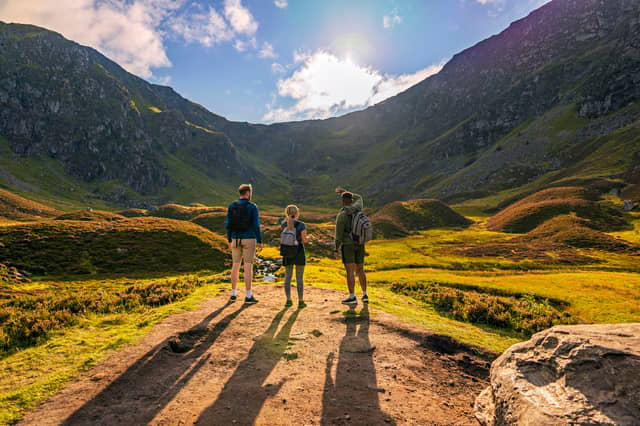
She also talks about the transformative potential of small changes - for example stretch while you’re waiting for the kettle to boil or step outside for fresh air while drinking your morning cuppa.
Studies have shown that even 15 minutes in nature reduces levels of cortisol (the human stress hormone).
Even something as simple as saying ‘thanks’ to a bus driver (which Irish people are renowned for) or saying ‘hello’ to a person in a shop has a wellbeing effect far greater than the effort it took.
Keep in mind that the number one factor in wellbeing is relationships and that other studies have show that if you listen to a negative person it takes three hours to neutralise your feelings.
Another simple concept to improve our wellbeing and mental health is to have fun! That’s not the catchphrase of an ‘influencer’ but the serious advice of an A&E consultant with more than 40 years medical experience.
Dr Chris Luke has a particular interest in preventing health problems before they reach overcrowded and overwhelmed emergency departments.
Happiness being defined as ‘basically the absence of pain’ is not what we should be focussing on, he says, in fact we shouldn’t even think in terms of a ‘work-life’ balance - we should call it a ‘work-play’ balance, he says.
There is even an academic term for the inability to experience pleasure in life - anhedomia.
Dr Luke doesn’t use the term ‘burnout’ because it’s a post world war two military term, but he says we have to fix ‘unhappiness.’
With that in mind, Dr Luke says ‘play’ is not a luxury, nor is it childish. So do what brings you joy - play sport, drink a glass of wine, paint.
Calodagh adds, when we are being creative our heart and mind is working together.
Of course the ‘we are what we eat’ theory does play a role in our wellbeing.
A lot of research is being done in UCC and Professor John Cryan is Professor and Chair at the Department of Anatomy and Neuroscience in the School of Medicine at UCC. His research links the effects of our gut microbiome with our brain functions and our mental health.
An area of growing importance in health, Prof Cryan points out that not only were microbes here before us, but humans developed with them. They’re essential, not only to our wellbeing, but to our whole existence.
Part of his research has shown that students in the stressed exam season get better sleep when they take prebiotics to boost their gut microbiome.
His work is showing the correlation between our gut microbiome and our overall health. In short, the more diverse our diet the more diverse our gut microbiome and the better that is for our overall health, physical and mental.
In many ways the people with experience and doing the serious research are starting to tell us what we have always been told - slow down, eat well, have fun.
Touching grass and breathing in fresh air won’t solve all our problems, but it might start to make us feel more well and, if nothing else, that is a rather excellent start.