
Kilkenny to host launch of 'Five Decades of Camphill in Ireland' book

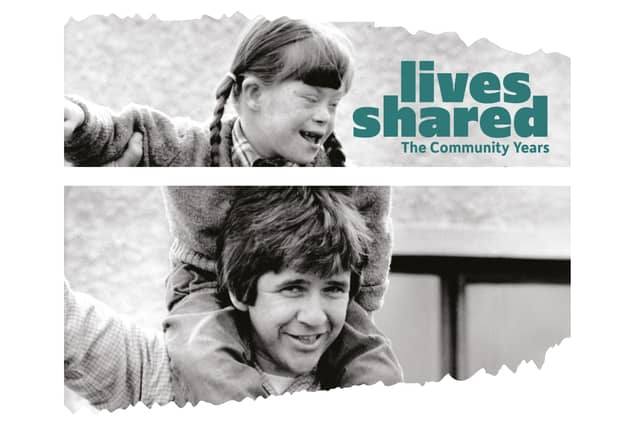

Thomastown is to host a book launch, this Sunday, of the stories that celebrate the area at the centre of the ‘Camphill Meitheal.’
Camphill’s first 50 years in Ireland dramatically challenged the stigma oppressing people with an intellectual disability, offering an alternative of full active citizenship in diverse communities.
The movement has strong roots in communities across Kilkenny - reflected in the cover picture of the book showing the late Patrick Lydon, who lived for many years in the Callan area.
A local launch of the work will take place in Thomastown Community Centre, this Sunday, November 1, at 2pm, by Professor Mary McCarron and renowned artist Brianna Hurley.
Beginning in 1972, a network of sustainable and life-sharing communities began emerging here dedicated to nurturing as equal citizens hundreds of people with intellectual disabilities.
This remarkable social history traces how youthful pioneers with very different but complementary abilities, founded eighteen mostly farming and horticultural hamlets where salaries were largely unknown, and neighbours were drawn into the lives of ‘Camphillers’ and vice versa.
Inspired by the international Camphill movement which took root in Scotland in 1939 and spread to more than two dozen other countries, each community was built by harnessing a frontier-like enthusiasm and the common effort of its residents in the name of a shared vision.
Life-sharing and income-sharing were integral to the ethos of these intentional co operatives whose values were underpinned by the teachings of the Austrian philosopher and educator, Rudolf Steiner.
The particular history of each community is traced in detail here, in many cases by founding members, capturing an essential, hitherto-undocumented, overview of the Irish republic’s iteration of Camphill as it wove a web stretching from Monaghan to Kerry. The book is the work of over eighty storytellers.
The accompanying illustrations speak to its vision, featuring people of all abilities sharing their lives: working the land, running their common homes, and sharing meals adorned by ingredients grown and harvested by all. Craft workshops, music-making in the National Concert Hall among other places and a nationally esteemed art studio also feature.
The fundamental changes to the Camphill model fashioned from 2013 onwards in response to new statutory requirements are also reflected upon. There’s a strong sense of grieving for what has been lost in the transition from a fully participatory social model to a service provider model of care.
However, Lives Shared is ultimately a story of hope, celebrating the legacy of a community and its everyday heroes.