
Opinion: A Queer auld Céilí in Callan gives pause for thought - John O'Connor

Inclusion activitst John O’Connor reflects on history and the importance of Pride
After a wonderful evening of music at Fennelly's in Callan last Saturday, a poster caught my eye advertising a Queer Céilí to be held this coming Friday as part of Kilkenny's Rainbow Weekend.
It was a simple poster, which transported me back to the 1970s, in Dublin and to memories of a friend who was gay at a time when homosexuality was still criminalised in Ireland. The country he called home gave him little opportunity to live openly or authentically and like so many others of his generation, he left for London in search of the freedom simply to be himself.
One Sunday morning I recall seeing him after he had been the victim of a violent hate crime. His face was bruised and cut because he and his partner had shown affection in public. How was anyone expected to cope with such hatred?
The experience drove him further from his homeland, separated him from his family, and left him struggling with loneliness. In time, he sought refuge in alcohol.
A few years later, while travelling in Germany in the early 1980s, the same theme surfaced again in an unexpected conversation.
Near Heidelberg, I met a thoughtful philosophy student, and we spent a few evenings discussing life and what it meant to be human. One conversation has remained with me ever since. He argued that adversity and marginalisation made people stronger.
This was long before psychology gave us the language of post-traumatic growth, the idea that some people emerge from hardship with a deeper sense of meaning and resilience. It was an intriguing argument, but I found myself questioning it.
Although my young German acquaintance was not entirely wrong, the deeper lesson I have taken from engagement with community inclusion over many years, is that marginalisation rarely builds people up. More often, it erodes confidence, affects mental wellbeing, and reinforces the very exclusions that caused the suffering in the first place. Instead of expanding human potential, it too often narrows the possibilities available to people.
That is why Fennelly's and the idea of a Queer Céilí resonates deeply. Ireland has changed profoundly since those decades.
Today there are more spaces where diversity is celebrated, more conversations that affirm rather than silence, and more opportunities for people to live with difference and without fear. During the 1960s and 1970s, many people lived on the margins because of a deeply conservative social culture that gave little room for difference.
Too often, institutions that should have protected vulnerable people instead reinforced exclusion and silence. We can learn from that history.
When I think back to my young German acquaintance, I imagine he would still knowingly smile and insist that adversity can reveal strengths we never knew we possessed. There is some truth in that.
Yet the greater lesson is not that we should welcome the storm, but that we should build a society where fewer people are forced to endure it. Human beings flourish not because they are broken, but because they are accepted, valued, and given the freedom to belong.
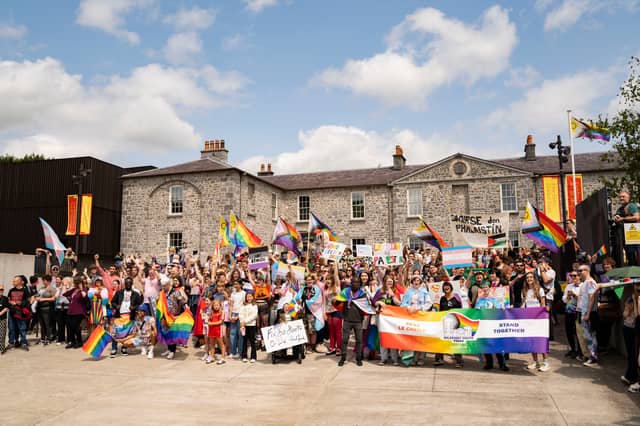
That is what a rainbow really symbolises. Not that suffering was necessary, but that hope can emerge after darkness. A Queer Céilí is more than an evening of music and dance. It is a celebration of belonging, of dignity, and of a society slowly learning that everyone deserves the chance to step onto the dance floor without fear.
John O’Connor is an inclusion activist