
The small Galway community who stood up to defeat solar farm development

‘This was a community that had never done anything like this before; 160 submissions came in from a standing start, from people who read the documents and set out what they found’
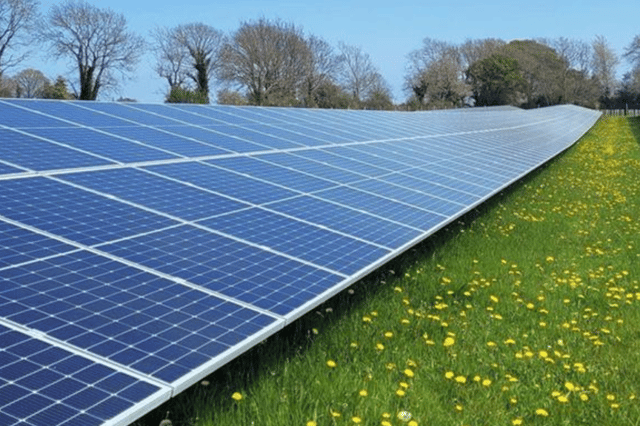
Galway County Council has refused planning permission for a 93-hectare solar farm near Lackagh, finding that the development would create a traffic hazard, pose a health and safety risk to public water infrastructure, and effectively sterilise the public roadway.
The local authority rejected a ten-year planning application by Blackthorn Solar Farm Limited, a subsidiary of renewable energy developer BayWa r.e., which had sought permission for a 40-year operational lifespan.
The development would have involved the construction of around 352,500 square metres of ground-mounted solar photovoltaic panels and 18 transformer stations in Cahernashilleeny, Knockdoebeg West, Knockdoemore, and Lackagh Beg.
In a decision issued on Monday, the Council stated that the access points and haulage routing on the local road network would render roads unsuitable to carry the heavy goods vehicle and articulated rigids traffic generated by the project.
It also cited an absence of complete details and relevant third-party agreements by the applicant, finding the scheme would endanger public safety by reason of a traffic hazard.
The local authority also found that proposed grid connection works and extensive cable routing along the R354 would cause direct and indirect impacts to the carriageway.
Council planners concluded that this infrastructure would effectively sterilise the public roadway, preventing the Council from carrying out essential works, drainage upgrades, or extending group water scheme mains and other trunk services.
The decision followed a submission from Uisce Éireann, which warned that the layout had the potential to build over multiple existing public infrastructure assets without adhering to mandatory separation distances.
The planning authority ruled that this constituted a health and safety hazard that was contrary to proper planning and sustainable development.
Two further grounds for refusal were based on deficiencies in environmental assessments.
A glint and glare assessment was deemed insufficient, failing to address direct and indirect impacts on national roads under guidelines, materially contravening development management standards on solar energy.
Furthermore, following an intervention by the Department of Housing, Local Government and Heritage, the council determined that the submitted archaeology and cultural heritage assessment process was incomplete.
Some 160 submissions had been lodged against the application in a parish with a population of approximately 2,190 people. These included objections by a national school, four sports clubs, and a childcare facility.
Breeanna Dunne of the Lackagh-Knockdoe Solar Action Group welcomed the refusal, stating that local residents had responded from a standing start to analyse the planning files.
“This was a community that had never done anything like this before; 160 submissions came in from a standing start, from people who read the documents and set out what they found,” she said.
“We are grateful to everyone who took the time,” she added.
“We have never been against solar energy. What we asked for was that this application be properly assessed. That is what happened.”
The grid connection and an associated 110kV substation were not included in the application before the council, as they are subject to a separate process with An Coimisiún Pleanála which has not yet been lodged.
Under planning legislation, the developer has four weeks from the date of the order to appeal the Council’s refusal to An Coimisiún Pleanála.
It’s not the first solar farm in the area to fail to make it past the planning process. Last year, Galway County Council has rejected plans for a 590-acre solar farm between Monivea and Abbeyknockmoy.
The proposed Bellville Solar Farm, by Heron Solar Ltd, would have covered approximately 239 hectares (590 acres) of North Galway countryside.
That development would have stretched across 14 townlands, including Lissaniska, Oakwood South, Cahernaglass, Ryehill Demesne, Carrowmore, Parkacurry, Killaclogher, Ballynaboorkagh, Cashlaundarragh, Corrafaireen, Shantallow, Carrowreagh East, Caherlissakill and Laragh Beg.
The company had sought ten-year planning permission to develop the solar farm, which was intended to operate for 40 years.
Residents objected to the prospect of hundreds of acres of productive agricultural land being used for solar energy generation for four decades.