
Vacant Galway village buildings over 200 years old given new €1 million lease of life

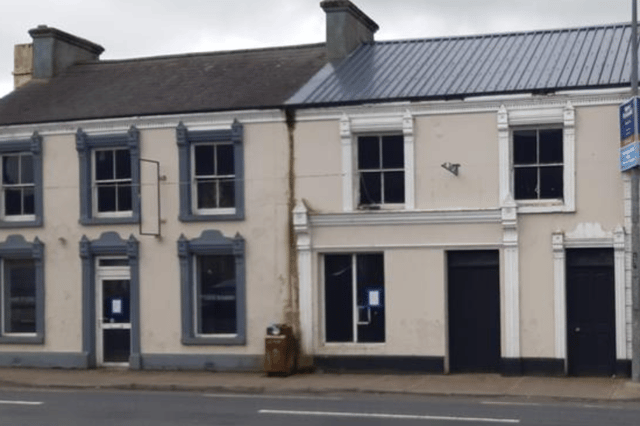

Two of the buildings date from around 1820 and are listed on the National Inventory of Architectural Heritage with the transformation to be completed by 2028
Three vacant buildings in the heart of a Galway village – two of them dating back over 200 years – are to be given a new lease of life with a €1 million transformation into four new homes.
Galway County Council last week signed a contract with Mannion Build Ltd. for the redevelopment of the three vacant buildings in Moylough village, with the four new homes due to be completed by May 2028.
The €982,556 project at Plás Stiofáin, between Cheevers Pub and Moylough Post Office, will see two three-bedroom houses and two two-bedroom apartments constructed behind the retained front facade of the existing terrace.
Their decorative window and door surrounds, traditional shopfront and other architectural features are recognised as an important part of the village streetscape.
The contract was signed at Áras an Chontae last week, and completion is expected in May 2028.
Cllr Andrew Reddington, Cathaoirleach of the County of Galway, said the development was a major project for Moylough.
“Town and village renewal is a key priority for Galway County Council. Bringing vacant buildings back into use helps breathe new life into our communities and gets people living in the centres of our towns and villages," he said.
“This project will preserve an important part of Moylough's built heritage while providing four new homes. It is about protecting the character of the village and ensuring these buildings have a future.”
The development is particularly personal for his fellow Cllr Michael Connolly.
“I have known this property since my school days and later worked in the pub and shop, so I have a strong personal connection to the property," he said.
"Having worked for the past 20 years to see the property brought back into use, I am delighted that the contract has now been signed.
“This development will remove dereliction from the heart of Moylough, provide new homes and preserve an important part of the village’s heritage for future generations,” he added.
Liam Conneally, Chief Executive of Galway County Council, said the development reflected the Council's commitment to regenerating older buildings while protecting their heritage.
“We have a responsibility to make the best use of existing buildings and sites in our towns and villages. Retaining the facade at Plás Stiofáin will preserve an important feature of Moylough's streetscape while allowing the buildings behind it to be redeveloped to modern housing standards," he said.
“Working with elected members and the local community, delivering projects such as this can make a real difference to the appearance and vitality of our villages, bringing vacant properties back into use and creating places for people to live.”
The works will involve demolishing the existing structures behind the facade and constructing the two houses within the footprint of the eastern buildings.
The apartments will occupy the western section, with one on the ground floor and one on the first floor. All four homes will have private open space to the rear.
Galway County Council's Housing Department is responsible for the architectural design, with SDS Design Engineers providing civil and structural engineering services, Lawler Consulting Engineers providing mechanical and electrical engineering services and CQS Group acting as quantity surveyor.
Damien Mitchell, Director of Housing at Galway County Council, said the design had been developed to balance the retention of the historic buildings with the provision of suitable modern homes.
“The buildings are an important part of Moylough's architectural heritage, so retaining the front facade is a central element of the project. The design will respect the existing building heights and streetscape, with chimneys retained where possible," he said.
“It is an ambitious project that combines heritage preservation with modern housing design. The aim is to safeguard the character of the buildings while securing their long-term future as homes.”