
‘Why I won't be watching Lost Children of Tuam’
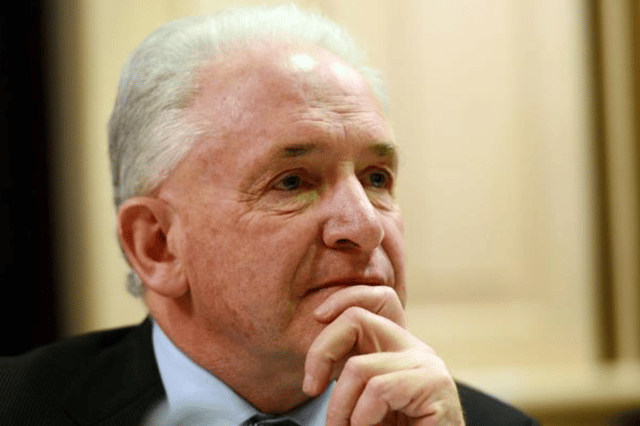

It was about twelve years ago, when I was on a speaking tour of the United States organised by the Church Reform movement, that the dramatic news from Ireland about nuns ‘dumping babies bodies into a septic tank’ had reached the US, writes Fr Tony Flannery
I was asked many questions about it by the different gatherings I addressed. This was the year when Catherine Corless released the story about the Tuam Mother and Baby Home.
I know Catherine asserts now that she never said the babies were put in the septic tank, but she certainly did nothing to correct the version that was being reported. Instead it was precisely that image, of the nuns, the babies and the septic tank that made it such a sensational story around the world, a godsend especially to the tabloid outlets, and of course to social media.
Currently a dig of the area is progressing, and I know that much more excavation is outstanding but so far over a hundred bodies have been discovered, all buried carefully in coffins.
We are also aware of a couple of basic facts that are generally overlooked in the media presentation of this story.
The building, which had previously been a workhouse, was owned by the County Council, not the Bon Secour Sisters, who largely depended on the Council for the resources to run the home.
During the forties the home was over-crowded, and diseases of various types were rampant. In some instances even whole families arrived for shelter.
The nuns appealed for resources to provide an isolation area for those with disease, but were constantly refused. As a result there were a great number of deaths during those years.
And it is also known that that the supply of coffins had run out, and for a time they were unable to acquire any, so they had to improvise as best they could. But still the Bon Secour nuns continued to do their best in providing a service that no one else in society was willing to provide.
It is ironic that now they are being vilified, when in fact they were the only people that I know of in that period, who did not abandon the children. In the way this story is being portrayed in the public domain the focus is almost totally on the nuns.
Even as someone who hasn’t been short on criticism of various aspects of the Catholic Church, I find the ease with which commentators and media discussions so quickly and easily conclude that a great many of the problems in society, both past and present, are the fault of the Church.
Over and over again I find myself recoiling from the superficiality, the lack of depth or breadth in the thinking that underlies the regular attacks particularly on nuns in this country.
Recently a relation of my own, a woman in her eighties living in the US of whom we had no knowledge, came to light. Her birth and parents are uncertain, but she is clearly part of our extended family. She was an abandoned baby and was brought to the Tuam Mother and Baby Home.
In a recent conversation with her, having met her for the very first time, she told me she had spent the first seven and a half years of her life in that home.
She has good, even happy memories of those years, and she asserted very strongly that the nuns were extremely kind and caring, and that she had never seen any of them abuse a child in any way. She was quite upset and annoyed by the current depiction of the Tuam Home in Ireland today.
From the reviews I have read and the discussion Liam Neeson had with Patrick Kielty, it would appear that his movie fits in with this prevailing narrative. I won’t be going to see it.
Tony Flannery is a native of Attymon and a member of the Redemptorist congregation. Over a decade ago, the Vatican objected to some of his writings; he was summoned to Rome by the Superior General of the Redemptorists – a process which culminated in him being forbidden to minister as a priest, a situation that continues.