
Israelis await final election results amid claim of foreign interference


The elections committee said ‘there is no basis for claims of systematic violations of election integrity’.
Israeli Prime Minister Benjamin Netanyahu and his party have amplified allegations that the country’s Arab-led parties had “stolen” the election, with final results expected to confirm his bloc has lost its majority in parliament.
The opposition accused him of demonising the Arab population after a historic showing by Arab-led parties. If the rest of the opposition teams up with them in a rare and politically risky move, they would form the next government. Final vote results are expected on Thursday evening.
Mr Netanyahu seized on a new request by the country’s elections committee to the Shin Bet intelligence service to investigate alleged election interference by unspecified “foreign entities against the Israeli interest”.
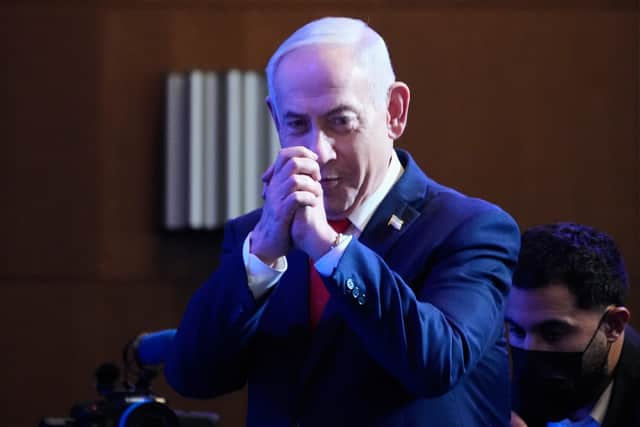
While the request had no reference to Arab-led parties, the prime minister and his Likud party said no party should co-operate with Arab-led ones.
“The elections in Israel have been stolen,” Likud said, claiming without evidence that the alleged interference was “aimed at facilitating a foreign takeover of the Knesset, the Islamisation of Israel”.
It was not clear who made the latest allegations, but Qatar issued a sharp statement saying: “We categorically deny allegations that Qatar has interfered in Israeli elections or funded any activities intended to influence their outcome,” adding it is accused of buying off the Arab vote.
The elections committee wants findings within the week. Israeli law requires election results to be certified by November 4.
Before the vote, Mr Netanyahu and Likud painted the Arab-led parties as a danger to Israel, which critics called an attempt to further marginalise Arab citizens who make up 20% of the population but are often seen with suspicion because of their sympathies for other Palestinians.
Those campaign attacks, along with anger over the divisive Mr Netanyahu and his far-right government, brought outraged Arabs to the polls like never before.
On Thursday, Yair Golan, head of the Democrats party, accused him of “attempting to undermine the election results through an ugly delegitimisation campaign directed against the will of the public — and against the Arab public in particular”.
Sami Abu Shehadeh, chairman of one of the parties in the Arab-led Joint List, called the claims a new phase of “incitement” against Arab-led groups.
The head of the Arab-led Ra’am party, Mansour Abbas, welcomed the investigation into election interference and said his party had nothing to do with the case, while accusing Mr Netanyahu of a campaign of incitement.
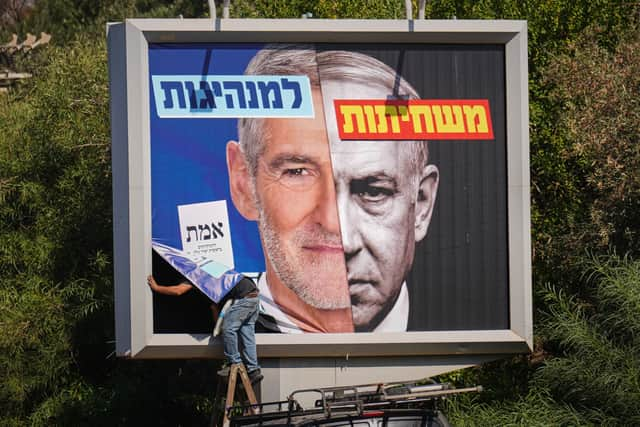
The prime minister’s chief rival, former military chief Gadi Eisenkot, warned that political actors should not “exploit the situation” to influence the timing of the next parliament’s swearing-in, set for November 10. Mr Eisenkot’s Yashar party said he had been briefed by the Shin Bet chief.
Even the elections committee seemed to sound a note of caution. “To the best of our knowledge, there is no basis for claims of systematic violations of election integrity,” its acting director general said in a letter dated Thursday to one member of parliament and seen by the Associated Press.
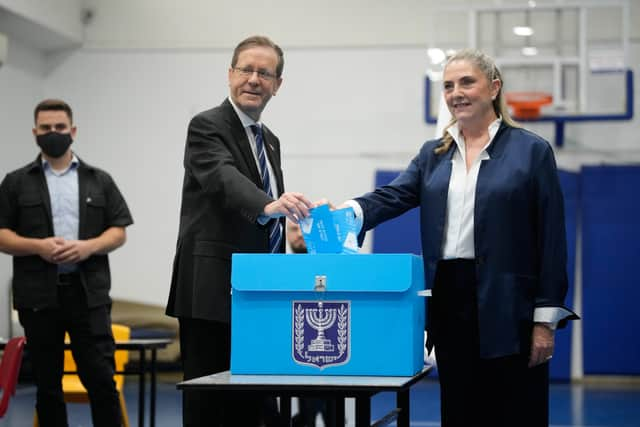
President Isaac Herzog, who must soon task Mr Netanyahu or one of his opponents with forming the next government, described it as a “sensitive moment” and called for a full investigation.
He said: “We must not tarnish an entire community that sought to exercise its right to vote and take an active part in democracy.”
The developments amplified difficult decisions for the weeks ahead, including whether some Jewish and Arab parties could team up in a historic alliance, or whether some parties that campaigned on ousting Mr Netanyahu would join forces with him.
While the race for a 61-seat majority needed to control the 120-seat Knesset plays out, Mr Netanyahu remains in charge.
Local media have projected 53 parliament seats for his bloc, 48 seats for opposition parties and 19 for Arab-led ones, which also want Mr Netanyahu out.
If he loses office, that would set off a cascade of events that critics say he has desperately sought to avoid. He would be taken to account over years-long corruption allegations, and an inquiry would almost certainly begin into the security failures that led to the devastating Hamas-led attack on October 7 2023.
Despite receiving the most votes, Likud on Wednesday accused Arab-led parties of stealing the election and asked the elections committee to investigate. It did not provide specific evidence to support its claims.
Even without a role in a coalition, Arab-led parties could assert their growing power by supporting Netanyahu opponents in the next parliament. That could include electing a new speaker, giving them control of the agenda and potentially allowing them to advance and pass legislation before a new government is formed.
Mr Eisenkot has indicated he is open, with conditions, to joining forces with the Arab-led parties. Ahmad Tibi, second on the Arab-led Joint List, told Army Radio the opposition bloc contacted him to discuss replacing the Knesset speaker, and he told them the party would support the bloc’s candidate.
If a new government cannot be formed after multiple attempts, Israel would face a new election early next year. On Wednesday, Mr Herzog signalled he wanted to avoid that step – something Mr Eisenkot has said as well.