
10 ways to reconnect with moody teenagers


Youth performance coach Tony Griffin offers advice on how parents can navigate the tricky teenage years and forge a closer relationship.
Adolescents turning into entirely different – and often far more unpleasant – beings when they enter the teenage years is a familiar tale for many despairing parents.
It’s a transition that’s been described numerous times to performance coach Tony Griffin, who’s worked with thousands of teenagers over the past 20 years, and is author of the bestselling guide Teenager’s Book of Life, now in its third edition.
Griffin, a former All-Star in the Irish game of hurling, explains that the book contains all the things he learned from listening to teenagers over the years, and tells the Press Association: “It was the universal themes they struggled with. But my aim was to write in such a way that they’d actually hear it, and I learned how to speak to them on their level, so they’d stay connected.

“That’s the absolute key. Sometimes, as adults, we feel we’ve got to have all the answers and fill the role of parent. I’m not saying you’re going to be their best friend all the time, but there’s a way to speak to them that resonates with them. They can sense judgment a mile away.
“We’ve got to be willing to learn from them as much as vice-versa.”
So how can parents connect with teenagers?
1. Be curious
Griffin points out that very often, parents spend a lot of time instructing because the family has to function. But aside from the necessary instructions, there need to be moments of curiosity, he says.
“Just ask some questions – and I don’t mean questions like how was school, which can make your teenager feel like they’re almost on trial. Just broader questions.”
He says the substance of the question isn’t the only important thing and stresses that how you are when you’re asking it, and allowing space, is also crucial.
“So, for instance, a great time to do that is when you’re driving and you’re shoulder-to-shoulder. Just ask questions like ‘Hey, what was the best thing that happened to you today?’”
2. Ask their advice
“Asking their advice is a brilliant way to get teenagers to see their own self-worth,” he says. “All of a sudden, they feel so valuable, and it’s transitioning how we communicate from when they were children to seeing them more as someone who knows more than we realise.”
3. Don’t take it personally
As teenagers’ brains develop, they begin to pull away from their parents in pre-adolescence – and that’s evolution, Griffin explains.
“We want to create our own tribe, so we start to leave the home in terms of where our energy flows, so we want our peers more,” he says. “I say to parents – don’t see that as them rejecting you, see it as them readying themselves for the world, and that’s what they’re meant to do from an evolutionary perspective.”
This shift in teens’ independence and allegiances means it can be hard to talk to them, but Griffin explains: “They don’t talk very often because they’re not sure – they’re figuring things out.
“It’s not personal – they’ve never done this before either. Sometimes they’ll need your help to figure things out, and other times they just want to try and do it themselves. So very often, that’s the reason why they’re not as open and they’re more open with friends.”
4. Try not to judge them
Griffin stresses that teenagers are “hardwired for judgment”, and says he’s seen this many times, with thousands of teenagers.
“They’re so afraid of being negatively judged that it’s why they’re hardwired to fit in and to try and be liked,” he explains.
To counter this judgment paranoia, parents need to check their own judgment of their teen, and Griffin recommends they write down what they accept about their son/daughter.
He says: “It’s not ‘I wish they were more confident because I wasn’t confident, and it always held me back’ – it allows you to meet them where they are, not where you want them to be, and that in itself will mean they come to you more, just naturally.”
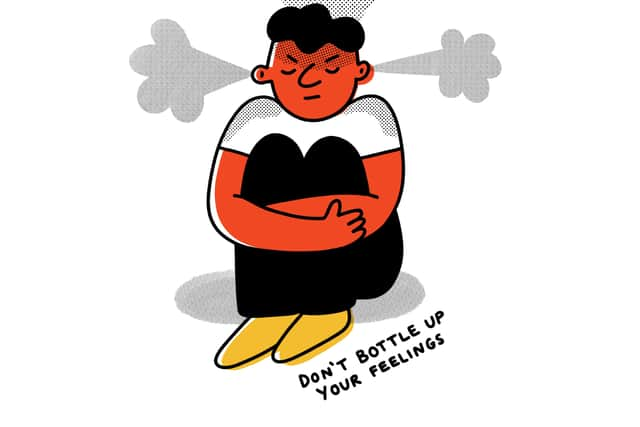
5. Help them understand their feelings
He says: “We want to teach them to feel what they’re feeling, and the best way to do that is to try it ourselves, to embody it ourselves. And so, if you see a teenager being really angry, underneath the anger is very often a fear, a sadness, a pain, a sense of shame, or something they feel powerless to change.
“So helping young people, especially boys, connect with that means they don’t try to mask it or run away from it with other forms of whatever that might be – drugs, drink, pornography.”
6. Help them understand others

Griffin says a lot of teenagers don’t realise other people haven’t got everything figured out either.
“That popular girl actually has her own problems or challenges, and so helping young people understand others, and how to develop relationships with others is something they need,” he says.
7. Help them understand hard times visit everyone
Life experience tells parents we all lose loved ones, and feel lost and frustrated at times, and Griffin says: “Help them become aware that this is not the end of the story. You can get through difficult times, and you’ll come out stronger.”
8. Give them space after letting them know you’re there for them
Parents don’t need to bombard teenagers with questions – Griffin says they just need to give them space to come to them if they want to, stressing: “They just need to know we’re there.”
He advises picking a moment when the barriers are down to say they can come to you with anything and you’ll be there for them. “It might feel a bit strange, but internally they’ll go ‘OK, this is my safe harbour if I need it.’”
9. Have an ally you can both turn to

There may be a relative or friend your teenager particularly gets on with, so Griffin suggests it can be a good idea to ask them to occasionally check in with your teen to ask if everything’s OK.
“So in a way, you’re putting people who they can turn to in their path. That’s the way we used to do it in society – the village helped raise young people.”
10. Be vulnerable
Let teenagers see a bit about who you are underneath. “Be willing to be vulnerable,” Griffin advises.
“If you’ve had a difficult time in life, don’t be afraid to show you’re like them. You’re human and that will mean they’ll be so much more predisposed to come to you.”
And he adds: “This isn’t something to endure – this can be an adventure, it can be fun. Yes, it can be hard at times, they can test your patience, but they’ll get through. We all do.”
Teenager’s Book of Life by Tony Griffin is published by Little Island Books, priced £12.99. Available now.