
KILDARE GARDENING COLUMN: Totally tropical

In the garden with Jo
Jo at Caragh Nurseries
With our recent heatwave, it seems only right to dig deeper into tropical gardening and take a look at which plants are able to cope with drought.
Tropical gardens are a lovely way to landscape your garden and create an exotic oasis to enjoy. There is no better way to create a lush, green and chill space which your friends and family will love. Tropical gardens are surprisingly easy to implement in a whole range of climates, including our Irish one.
Tropical gardens evoke the feeling of being enshrouded by a tropical jungle. With a combination of lush, green, bold foliage; dazzling colour; enclosure and focal points, tropical gardens have the ultimate wow factor. If you have ever been lucky enough to visit one of these lush regions of the world, it is easy to be inspired! Tropical environments, with their abundant wildlife, warmth and greenery, bring us as close to paradise as possible.
If you want to know how to make a tropical garden, there are a few things you will need to consider. Depending on where you live and how you want to use your garden, your design could vary.
When it comes to hard landscaping within tropical gardens, you have really many options. Most paving types will suit a jungle theme, but light-coloured natural stone works very well. Rustic paving that looks fragmented can look very effective, and our traditional crazy paving is ideal.
Vertical surfaces and walls can benefit from climbers and green wall systems especially next to a shady terrace. Stone walls and gabions work very well in tropical gardens. Small plants can be planted in crevices to mimic the way tropical plants take hold in every nook and cranny.
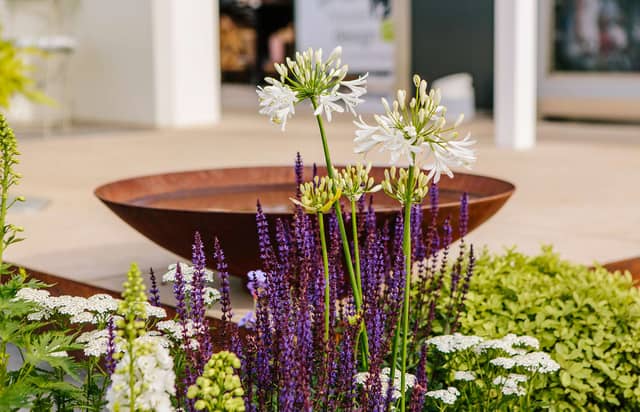
Tropical gardens are renowned for their diverse shapes and textures. Coarse palm-like leaves, fountains of cascading greens and explosions of colour make them a feast for the senses. The key is when making tropical gardens is to try to create as much visual texture as possible. This can be achieved by using varying surfaces, from loose gravels to paved terraces. Try to mix foliage types in your planting design to create as much contrast as possible. Rocks and boulders are perfect accompaniments to tropical gardens, creating a feeling of rocky banks and gravel beds.
When it comes down to it, the element which has the most responsibility for creating a tropical garden is the planting. The classic tropical look of large leaves, palms and dense foliage give the classic feeling that you are in a jungle.
Therefore, understanding how to use planting types within your garden is essential. You do not need a hot climate to create a tropical garden. You will, however, have to identify tropical-looking plants and how to combine them to create a believable jungle paradise outside your back door.
Don’t forget to include all the senses. For scent, choose evergreens and deciduous plants that have fragranced flowers and foliage. Evergreen jasmine is a stand-out, and also the evergreen magnolia, with its vanilla-like fragrance. Another favourite of ours for the winter months is saracocca with its dainty white flower but big punch of fragrance.
All the wonderful flowering options of tropicals will provide colour, from the vivacious cannas and gingers to the more delicate camellias and ranges of hostas - with loads more in between.
We initially think of water sounds in association with tropical gardens but it doesn’t have to end there. What about the simplicity of the rustle of bamboo foliage in the breeze to create the additional chimes of the garden.
Taste is probably not something we should be encouraging at this stage so maybe stick to tropical-inspired recipes and drinks.
Lastly, touch is a really important sense in the tropical garden – the foliage of these plants is incredibly tactile, from the featheriness and downy texture of some, to the contours of the large leaves of others. Add water and the harder surfaces to that and the promise of being able to walk barefoot in the summer weather, and you could be in Bali or the Bahamas.