
KILDARE WILDLIFE COLUMN: Super Sweet Rocket

Nuala Madigan from the Bog of Allen Nature Centre
Have you noticed that the leaves have started to fall from the trees, and that many of our wild plants have been pollinated with their bright coloured flowers now developing into fruits, berries or nuts?
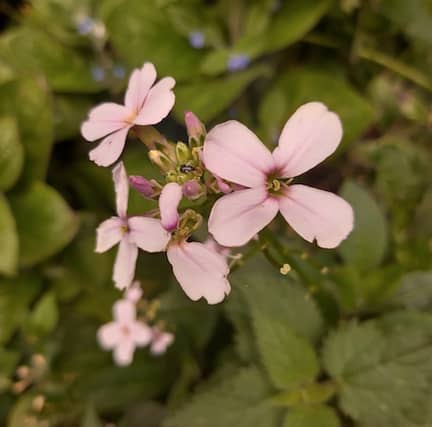
This is a sure sign that the summer is almost over and autumn is beginning. But it is not yet over and if you look closely there are still many wildflowers blooming. One that my colleague identified in flower at the Bog of Allen Nature Centre is dame’s-violet (feascarlus as Gaeilge). You may also know this wildflower as sweet rocket, and as it name suggests this plant produces a sweet scent particularly in the evening time, making it very attractive to night flying invertebrates such as moths.
While I have described dame’s-violet as a wildflower it is not native to Ireland. It was first introduced from Central Europe as its pretty pink or white four petalled flowers make it a lovely garden plant. For those of you interested in attracting pollinators to your garden, dame’s-violet is listed within the All Ireland Pollinator Friendly plant code.
At some point in time, dame’s-violet escaped into the wild and is today considered a naturalised rather thanan invasive species in Ireland.
Invasive species are those that have been introduced to an area and successfully compete with native plants limiting the native species populations, while naturalised plants have also been introduced, but they do not compete with native species and have no negative impact on their populations.
Watch for dame’s-violet in your community, you can expect to find it growing on damp ground along roadside verges, close to hedgerows, on river banks and in waste ground.
Dame’s violet can reach a height of just under one metre, the leaves are longer than wide and are attached to the stem by short stalks. This plant is also covered in hairs, it flowers until the end of August after which you will start to observe the long seed pods begin to develop.
Don’t forget if you come across a wildlife species that you would like help identifying I would be happy to help, contact me at [email protected].