
Cognitive neuroscientists whose son is one of 100 children worldwide with ultra-rare disease may be “one medical flight” from saving him
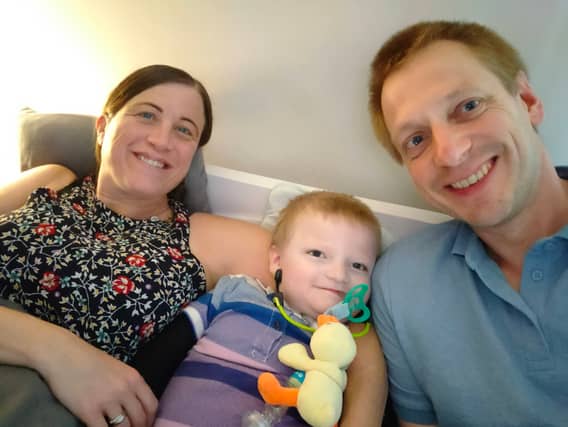

A pair of cognitive neuroscientists whose unbreakable faith has helped defy the “death sentence” given to their son as one of only 100 children worldwide with an ultra-rare disease say they may be “one medical flight” away from being able to save him.
Refusing to accept their boy Lex Munneke-Corbett’s two year prognosis after he was diagnosed with the rapidly degenerative muscle-wasting genetic disease, SMARD1, his parents Jennifer Corbett and Jacob Munneke, both 43,
have used their finely honed research skills to explore every avenue to make him well.
Now the couple, of Islington, north London, are desperate to raise £120,000 for a medical flight to the USA after their tireless efforts saw the U.S Food and Drug Administration clear an Investigational New Drug application in October 2021, which has allowed a clinical trial to begin for disorders including SMARD1, which Lex can join.

“This one injection could be completely life-saving.”
Jennifer and Jacob saw their world turned upside down within 24 hours when Lex, then one, suddenly stopped breathing in his mother’s arms on December 22, 2018, before suffering four heart attacks and a stroke.
Diagnosed with the inherited condition spinal muscular atrophy with respiratory distress type 1 (SMARD1) in April 2019, they refused to accept that there was no hope and he would not survive beyond two years, despite doctors’ warnings.
Jennifer said: “We are so close to the finish line, we can see it right there in front of us.
“There is this ticking time bomb and now there’s this endpoint and Lex deserves it so much, more than anyone else.”
Born on October 13, 2017, the first 14 months of Lex’s life were like any other baby boy’s.
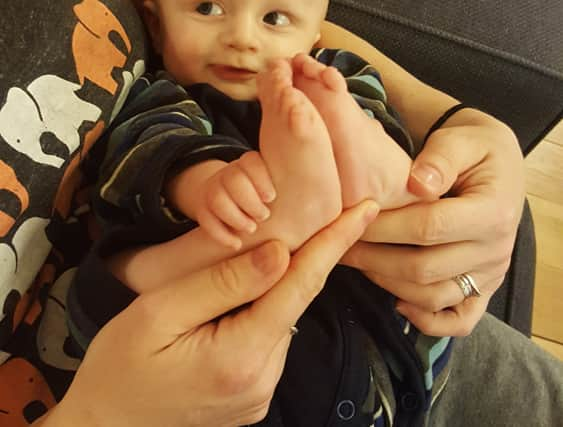
Jennifer said: “We were just cuddling on the bed together in the morning while Jacob was in the shower and suddenly Lex changed colour and stopped crying.
“I checked his airways then started doing CPR and screamed at Jacob to call an ambulance.
“I remember thinking, ‘Is this it?’
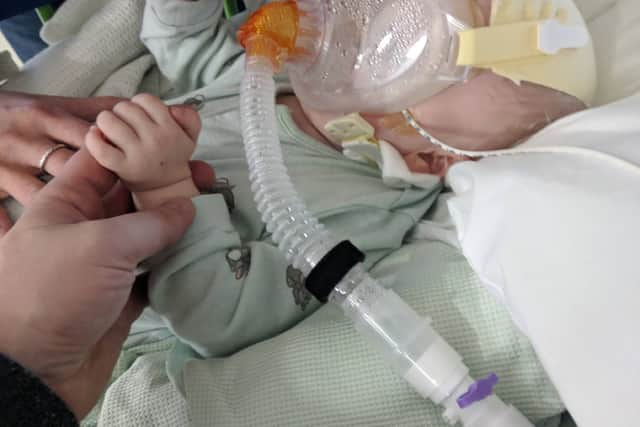
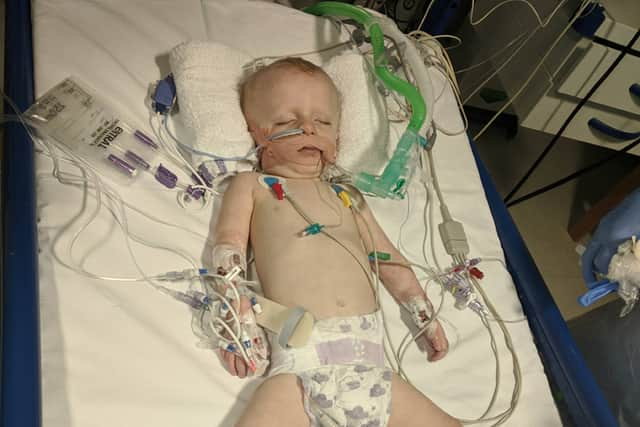
In less than 24 hours, Lex suffered four heart attacks and a stroke, being rushed to intensive care, where he remained for eight “hellish” months, as doctors tried to understand his fluctuating health and inability to breathe unaided.
It took nearly five months before doctors came back with a diagnosis on April 30, 2019.
Jennifer said: “We were pulled into this tiny, horrible room, and the neurologist sat down and told us it was SMARD1, an extremely rare muscle-wasting disease.
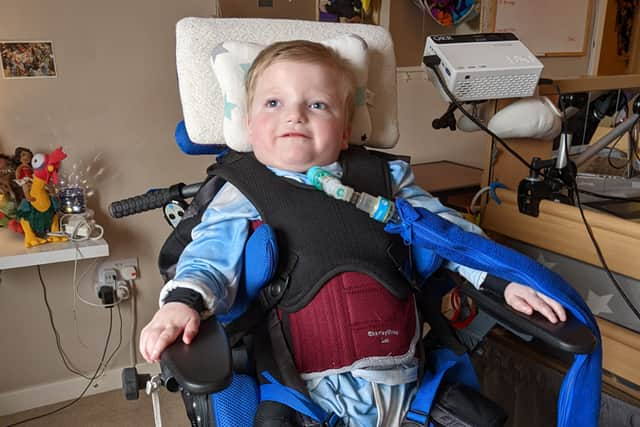
But Jennifer and Jacob – who both work as cognitive neuroscientists at London’s Brunel University – began frantically contacting researchers of similarly ultra-rare diseases and reading every possible study they could get their hands on.“You just have to look at Lex to know that he is so full of joy and life, there is no question about it,” said Jennifer. “Every time I have a glimmer of doubt, I look at this kid and see that smile and know I am stupid for even questioning.”
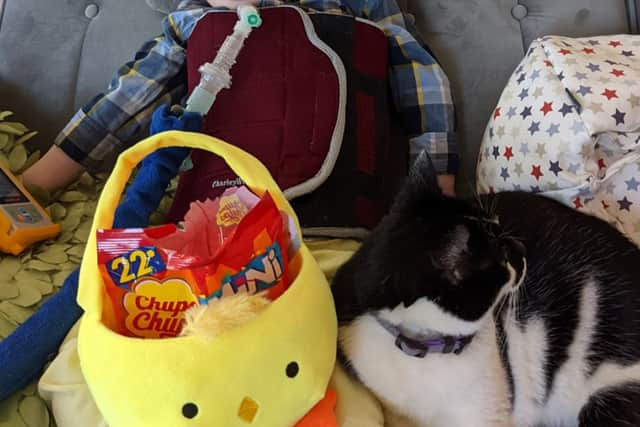
“We needed to convince his doctors that there was hope for Lex and he needed a tracheostomy to breathe,” said Jennifer.
“I understand that if you look at his condition on paper, you think, ‘This is a muscle-wasting disease which affects the diaphragm, so if he loses all muscle function, what is the point?’
“But we knew this tracheostomy would be a huge turning point and would let him live at home with us.”
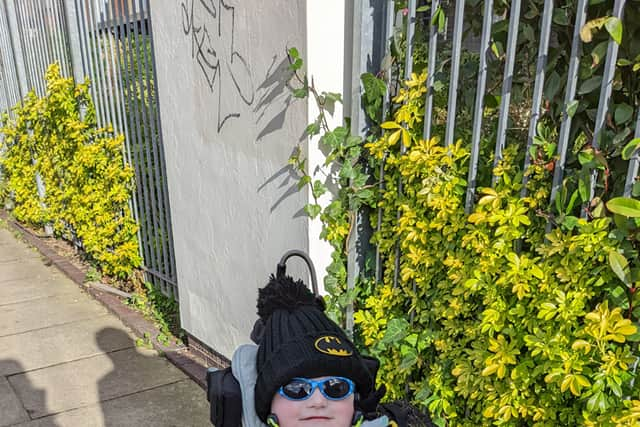
Jennifer said: “We came home and it was exciting and terrifying at the same time.
“We had only seen our child in an intensive care setting for the majority of his life.
“But we were so relieved and happy to be in the comfort of our own home.
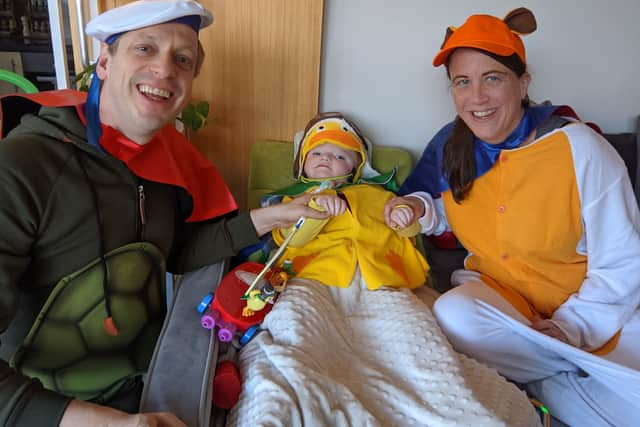
Not content to stop there, having already defied every expectation, the couple were determined to find a cure or treatment for Lex.
Jennifer continued: “Our parental instincts and understanding of the disease, having learned all we could about it, made us increasingly certain that gene therapy was something that could be done.”
The couple encountered doubters within the medical profession, but nothing shook their dogged determination to help Lex.
And, after speaking with researchers and investigating the disease, they discovered a gene therapy trial, offering the possibility of a treatment which could replace the faulty gene in their son’s body.
With the support of SmashSMARD, a group supporting medical research and awareness for rare diseases, the couple began fundraising for the pre-clinical trials. Just having the possibility of a trial on the cards for Lex gave them hope.
And, to their delight, in October 2021, the U.S Food and Drug Administration’s ruling meant a clinical trial for disorders including SMARD1 was given the green light.
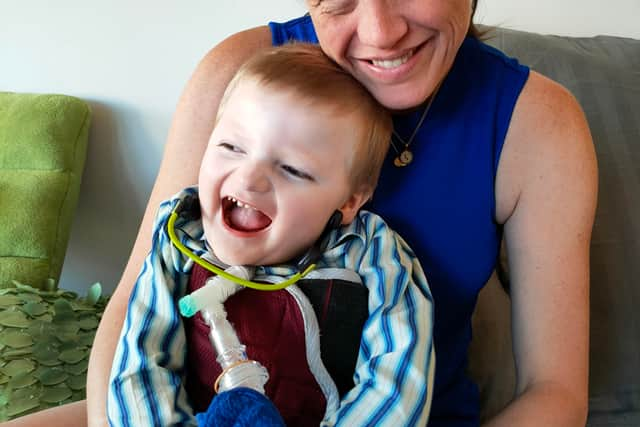
“Every day, I get up at 6am and I’m so happy to see this smiling ball of joy.
“We’re always exhausted and we’re almost always at breaking point, but then we see Lex and he doesn’t even bat an eyelid. He just keeps going and smiling, which is so inspiring.”
With the trial now available in Ohio in the US, Jacob and Jennifer have prepared everything they possibly need for Lex – with only the money required for the medical flight to get him there holding them back.

“We have every single thing in place. We have jobs lined up, we have a house lined up beside the hospital, we have insurance and paperwork, visas.
“Everything is ready to go, we just need this medical flight because Lex is too weak and medically fragile for a normal flight.
“The medical flights are £120,000 one way, so we need to raise the money to get there as quickly as we can and are appealing to people through GoFundMe to help us.
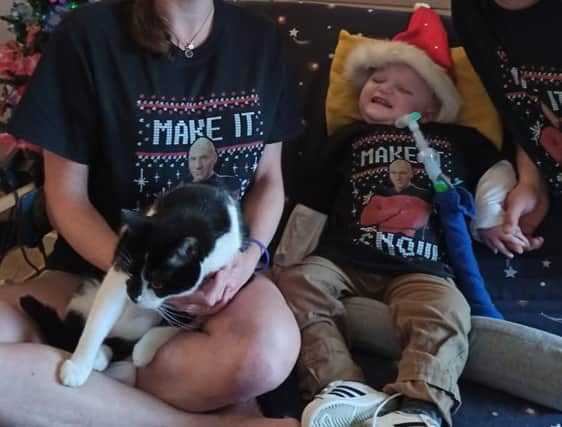
While Lex is unable to use his fingers to grip and needs a permanent ventilator, he is still smiling and laughing every day.
“The hope is that Lex could come off the ventilator,” said Jennifer.
“But we also want him to be able to play with his toys because, at the moment, his fingers don’t work.
“Lex loves music like Moana and Sesame Street and he loves toys that sing songs and flash lights.
“I use a soldering iron to open the dolls and toys to rewire them and create buttons that he can press, so he can still play with them.”
Lex was also recently given a speaking valve, which allows him to make louder noises, as his tracheostomy limited his vocal abilities.
“He can hum now along to music, which is just so special,” said Jennifer.
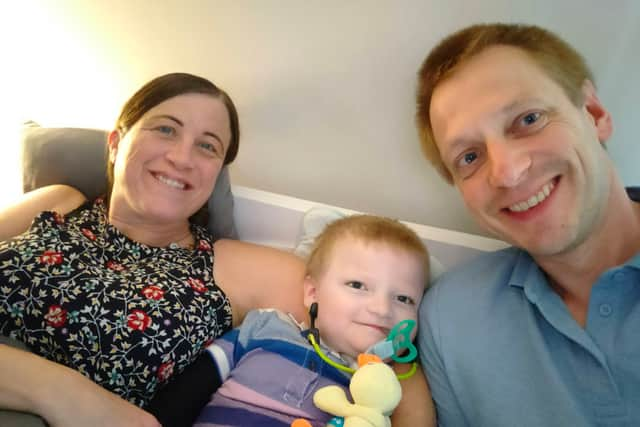
As well as being able to play, Jennifer and Jacob crave those normal, day-to-day joys that so far their family has not been able to enjoy.
“I just want to be able to get in the car with him and take him somewhere,” she said.
“I want to do something normal with him. The most boring but amazing things like getting ice cream together or going to the supermarket and caving in to buy him loads of toys, or arguing with his school about the best snacks to feed him.
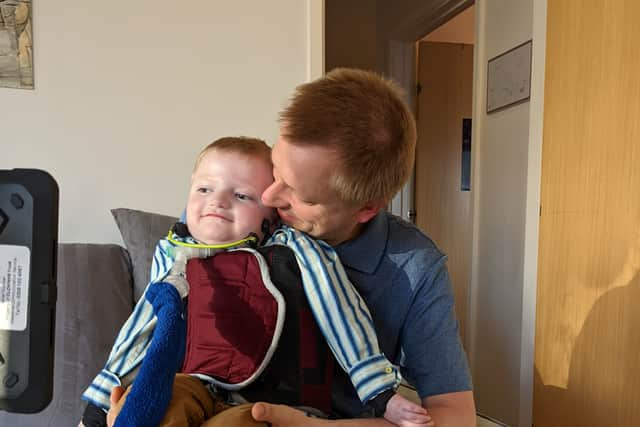
Jacob is equally determined to do all he can for Lex.
He said: “Our dream when Lex was first born was to travel the world with him, but that’s not going to happen.“If we could just take him to the park so he can play at the weekend, that would mean the world.“From a selfish point of view, it will give us peace of mind that we did everything we could for Lex.
“But we would have a different child. It the gene therapy is successful, we could take him to see other places, to spend time with his family and grandparents.
“It would mean the world to us if people could donate.
“And we wouldn’t stop there either – once we secured the treatment for Lex, we want to help the other children in the UK get over to the US too.”
- The family have set the goal of raising £200,000 for the flight and Lex’s medical care by July 4, Independence Day, to get Lex to the US before the degenerative disease affects him further.
Support Lex’s fundraiser here – https://www.gofundme.com/f/save-little-lex
INSTA LINK – Lex’s Insta: https://www.instagram.com/jennifer.e.corbett/.