
Diver finds bronze cannon on wreck of 17th century warship in Thames Estuary
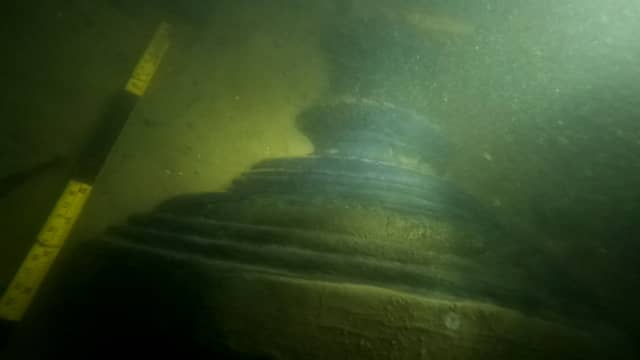

A diver has discovered a bronze cannon on the shipwreck of a warship that was destroyed by a gunpowder explosion and sank in 1665.
The 17th century ship the London formed part of a convoy sent in 1660 to collect Charles II from the Netherlands and restore him to the throne.
Its protected wreck lies in two parts off Southend Pier in Essex, and the cannon was discovered buried in silt and clay on the seabed.
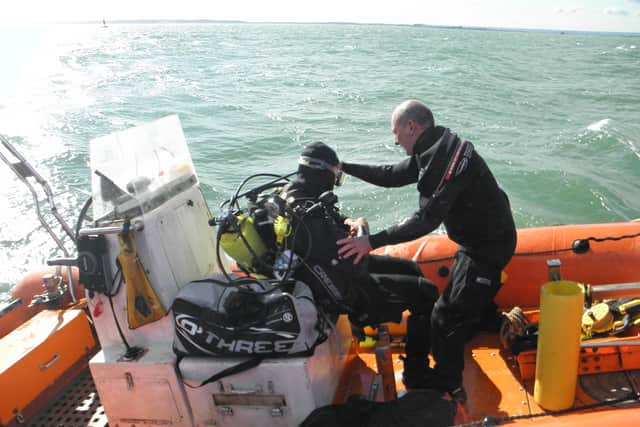
The find was made by Steve Ellis, one of Historic England’s licenced divers, who has been diving the nationally important wreck site in the Thames Estuary near a busy shipping lane for the last 14 years.
Mr Ellis said: “It was so exciting to see the cannon emerge from the seabed after many years of diving the site.
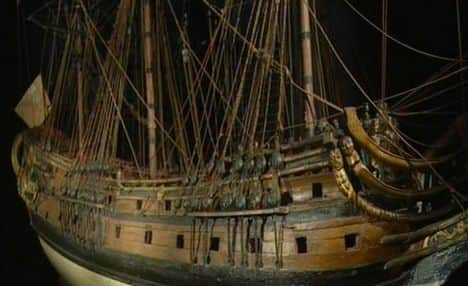
The London was built at Chatham Historic Dockyard in Kent in 1654-1656 during a time of great political upheaval after the English Civil War (1642-1648) and the First Anglo-Dutch War (1652-1654).
The newly discovered cannon is believed to be a Commonwealth medium-sized 8ft by 6in Demi-cannon, cast by George Browne around 1656 to 1657.
It is part of a set made for the London which was placed on the lower gun deck of the ship.
This type of cannon is larger than a culverin and smaller than a regular 42 pounder (19kg) cannon.
At the time of its sinking, the London was one of only four English naval ships to have a full complement of 76 bronze cannons.

Large cannons were in short supply and were expensive to make, requiring significant amounts of bronze or iron and individual casting.
As a result, captured cannons from enemy vessels and from other shipwrecks or decommissioned ships were often used to help equip new warships such as the London.
Based on historical documents and modern records, it is estimated that around 41 of the 76 cannons that went down with the warship have been recovered.
Duncan Wilson, chief executive of Historic England, said: “This amazing discovery will help us to better understand the types of cannons on board the London when it blew up in 1665.
“They weren’t all the same as some were captured from enemy ships, so there is a complex story to unravel here.
Historic England grants licences for Protected Wreck Sites on behalf of the Secretary of State for Culture, Media and Sport.
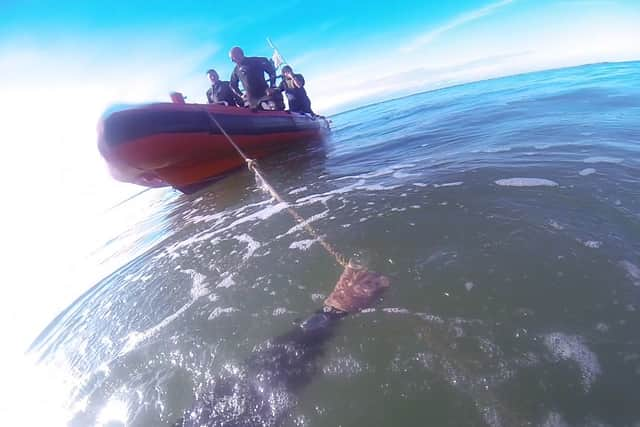
Visibility in the Thames Estuary is often extremely poor – less than half a metre at times – so conditions had to be perfect for the cannon to become exposed suddenly, embedded in clay.
Work on the site is particularly challenging due to a highly tidal environment and the wreck’s location next to a busy shipping lane where large cargo vessels regularly pass by.
“The discovery demonstrates just how culturally rich the wreck is, and with the site actively eroding the potential for further similar finds remains ever present.”
The cannon is now being included in Historic England’s forensic marking programme, using the latest underwater protective marking technology to deter thieves.
Mark Harrison, head of heritage crime at Historic England, said: “Protective marking of this cannon will act as a clear deterrent to those looking to unlawfully lift and remove historic material from Protected Wreck Sites.
“The new markings will give police the ability to link the offender to the crime scene and implement criminal proceedings.”