
Mum whose severe migraines masked incurable blood cancer says diagnosis was ‘accidental find’ after stroke-like symptoms
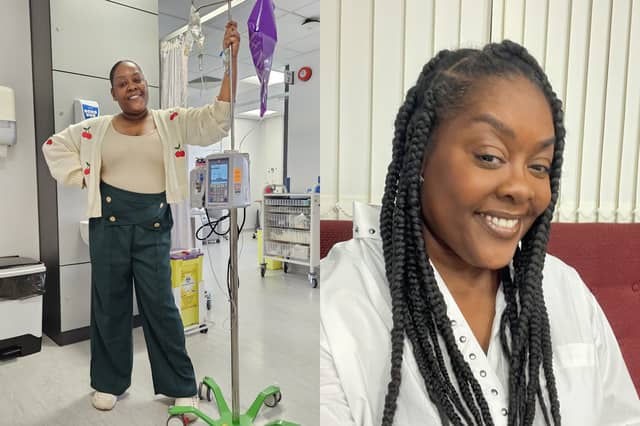

A mother whose severe migraines masked the symptoms of incurable blood cancer has said her diagnosis was an “accidental find” after one headache caused stroke-like symptoms.
Simone Williamson, 42, from Birmingham, had suffered migraines since her teenage years but claims she was often “fobbed off” by doctors who said she had “the highest pain medication” they could give her.
However, in March 2018, Simone said she was rushed to A&E after a severe migraine caused her to display the symptoms of a stroke, including slurred speech and paralysis on the right side of her body.
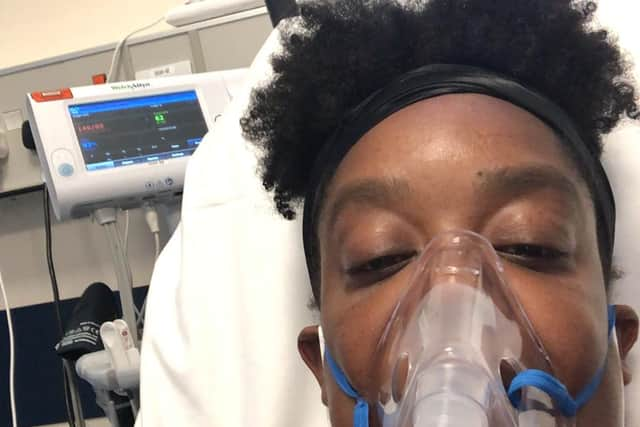
By the time Simone’s cancer was diagnosed, she said she had holes, known as lesions, in her ribs, pelvis and spine, and soft spots in her skull, and she needed to undergo chemotherapy as soon as possible.
The cancer has severely weakened Simone’s bones over the last seven years, and she has broken her neck twice, and although she relapsed in August 2023, she is now in remission for a second time.

Simone, who lives with her 41-year-old husband Aaron, told PA Real Life: “When I was first diagnosed seven years ago, it was literally elderly people on leaflets who were smiling.
“Nothing was spoken about in the Afro-Caribbean community, but now there’s a hard push for more representation.
“I want people to realise that having cancer isn’t something to be ashamed of.”

The charity says myeloma is frequently missed because the symptoms, including back pain, easily broken bones, fatigue, recurring infection and pins and needles, are vague and often linked to general ageing or minor conditions.
Simone said she had suffered with migraines since the age of 16 and, other than a late-onset epilepsy diagnosis, aged 30, she was otherwise “reasonably healthy”.
It was not until she experienced a particularly severe migraine in March 2018, which caused stroke-like symptoms, that everything changed.
“I was being fobbed off with the migraines, (with doctors saying), ‘There’s nothing we can do’… but then I presented as having a stroke,” she explained.
Simone, who previously worked as a teaching assistant but is currently unemployed, was taken to A&E by ambulance, where she underwent scans and further testing.
Doctors firstly said she might have sarcoidosis, but after a bone marrow biopsy and blood tests, she was called back to the oncology department where it was confirmed she had myeloma in April 2018.

“I was scared,” she said.
“I almost went into autopilot and I thought, ‘I don’t want my daughter to be alone’.
“I’d Googled everything and it said something like two years’ life expectancy or two and a half years, so in my head, I was going to die in two years.
“I started searching for life insurance policies. I had to get my ducks in a row just to make sure my daughter was OK.”
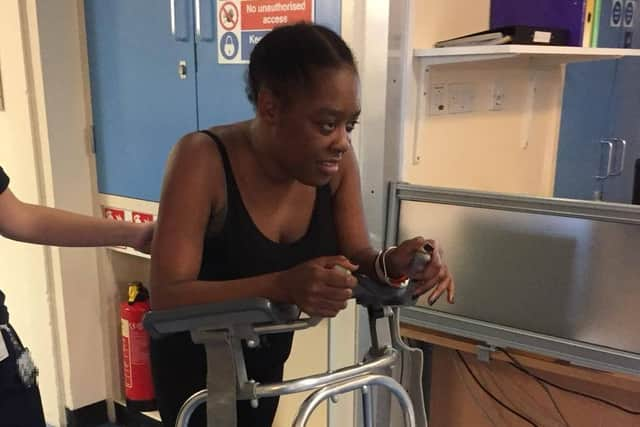
She started chemotherapy in July 2018, which caused side effects of peeling skin, swelling and nerve damage, known as peripheral neuropathy, and she needed a walking frame to move around in hospital.
“I had the worst case of peripheral neuropathy that the hospital had seen,” she said.
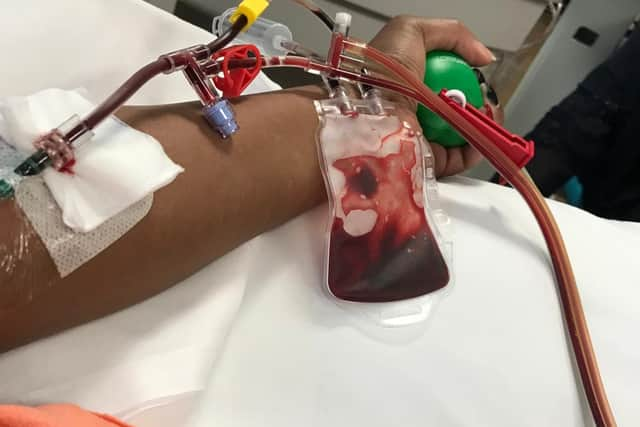
Simone later had a higher dose of chemotherapy, which caused her to lose her hair, eyelashes and eyebrows, before having a stem cell transplant, which replaces damaged stem cells, in February 2019.
At this point, she was told she was in remission, with no evidence of disease, but she said it took her “ages to recover” and her two brothers had to carry her up the stairs because she was “so weak”.
Over the following years, Simone said she started to process her “traumatic” diagnosis and experienced severe anxiety, but on New Year’s Day 2020, she wanted to get “back on track”.
“Cancer had taken my 2018 and my 2019 and then we were locked in due to Covid,” she said.

However, in summer 2023, Simone noticed she had back ache, pain in her ribs and she felt “extra tired”.
Her doctor requested blood samples and in August 2023 she was informed she had relapsed.
“I felt like I’d hit rock bottom,” she explained.

Simone started chemotherapy again in early 2024 and took steroids, and her treatment finished in July this year, when she was told she was in remission for a second time.
She said she will soon start maintenance chemotherapy and have another stem cell transplant in October.
“Those 18 months of chemotherapy felt like groundhog day,” she said.
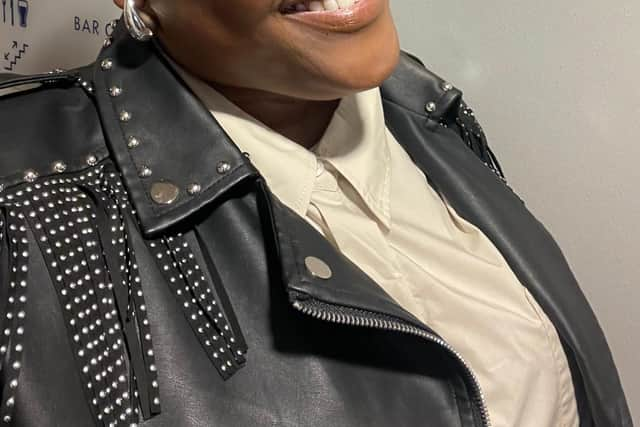
Simone is having regular check-ups and said she is “grateful to be alive”.
She is looking forward to her brother’s wedding next summer and hopes she is strong enough to “walk down the aisle”.
In support of the Knowledge is Power campaign, a joint initiative between Myeloma UK and the Race Equality Foundation, she hopes to dispel taboos around cancer in the black community.
She wants to encourage others to listen to their bodies, advocate for themselves and to donate blood or bone marrow, if they are able to.
“At the end of the day, you know your body best,” she said.
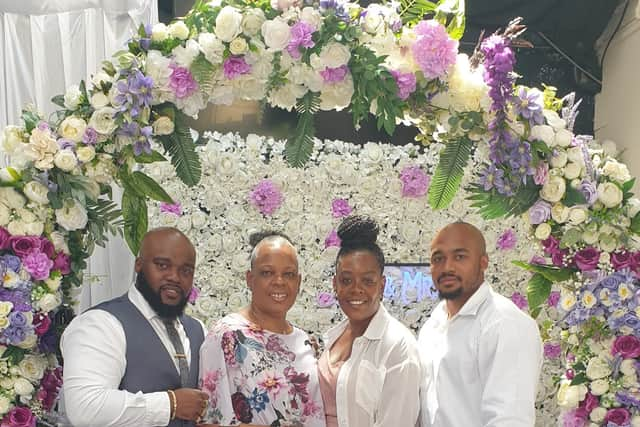
She added: “My diagnosis was an accidental find.
“I think that migraine that day was my saviour… and now I’m grateful for the smallest things, just being alive.
“Spending time with my family, making memories, is so important to me. That’s always been important, but it’s extra important now.”
To find out more about the Knowledge is Power campaign, visit: myeloma.org.uk/ref.