
Visually impaired woman excluded from sport at school now one step away from Paralympics after swapping Crufts for judo
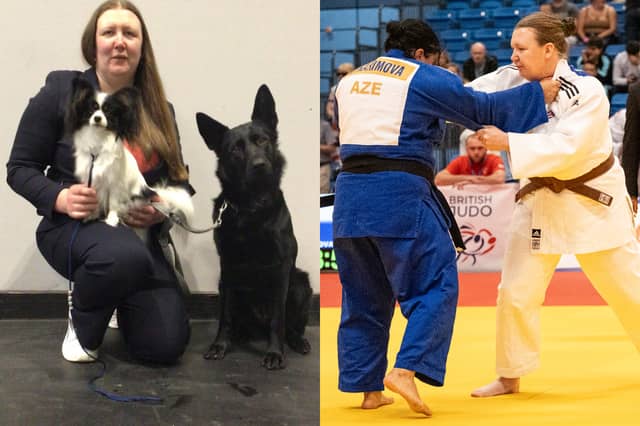

A visually impaired woman who was excluded from sport at school is now just one step away from the Paralympics after swapping Crufts for judo, and has shared a warning for the opponent who stands between her and Paris: “You’re in my way.”
Kirsten Taylor, 34, a former German Shepherd breeder who lives in Carnoustie, Scotland, was told aged seven she had cone dystrophy, which can cause decreased visual clarity and increased sensitivity to light, after struggling to read at school.
She said her central vision is reduced, meaning she often bumps into objects and was given a cane to help her navigate her surroundings aged 15, and at school she was excluded from sports and told she could not join the netball team.
Describing her vision, Kirsten told PA Real Life: “It’s like an old TV that’s static – everything has a textured, moving overlay.
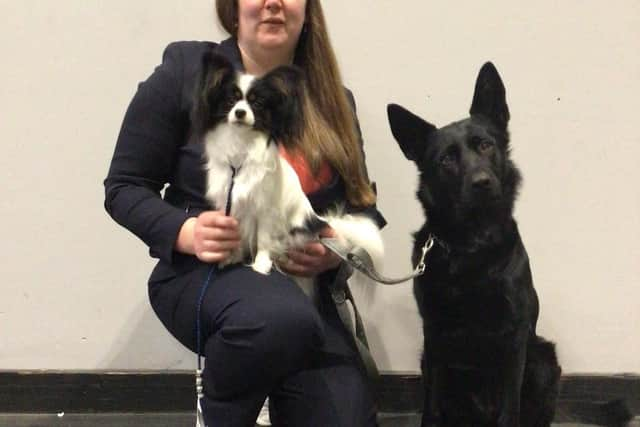
Kirsten has always been a strong swimmer, however, and had dreams of competing at the Paralympics one day – but decided to quit swimming, aged 18, to focus full-time on training her dogs for the renowned dog show, Crufts.
Her “fabulous” German Shepherds Havoc and Chaos first competed at the show – which Kirsten described as “Christmas for dogs” – in 2008, and she and her family have entered every Crufts event since.
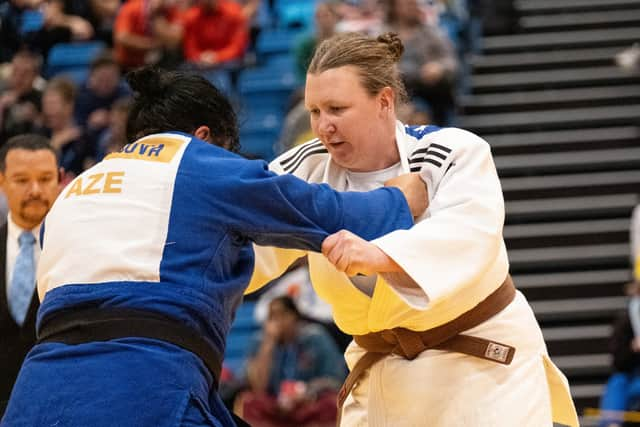
But after trying judo at a Scottish Disability Sport “Have a Go” Day in 2016, aged 26, Kirsten said she has finally found her dream sport, and now, she has swapped Crufts for the 2024 Paralympics in Paris.
Although she does not yet know whether she has claimed enough qualification points to make the French capital, she is working hard on and off the mat and has incorporated pole dancing into her training as it “gives you that confidence to move yourself”.
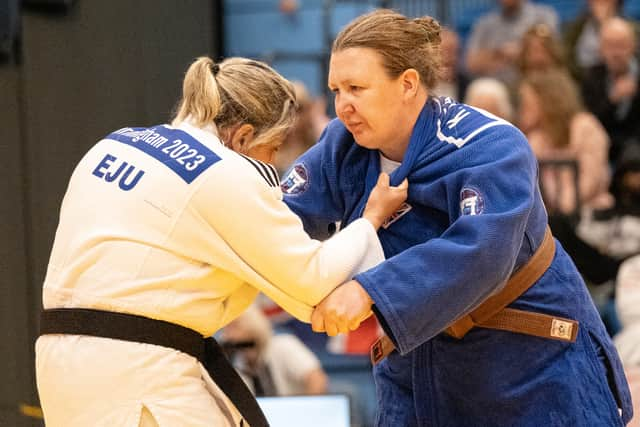
“I turned up to judo and it was the most natural thing ever,” Kirsten said.
“There was no awkward weirdness, and they took the time to show me everything and made sure I could do it all.
“I came out feeling like I had actually succeeded in doing something like someone who was normal. I didn’t feel like I had to be special.
“It was such a good feeling; I absolutely loved it.”
Kirsten first noticed her vision was impaired at primary school when learning to read, aged five, as she struggled to decipher certain words.
She said she would walk back and forth from her seat to the blackboard during lessons to read the writing – but teachers and her peers thought she was just “attention seeking”.
Given Kirsten was a “confident child” and “good at managing”, she was not diagnosed for several years – until her mother pushed for a GP appointment.
After various tests at hospital, around the age of seven Kirsten was told that doctors believed she had cone dystrophy, affecting both eyes.
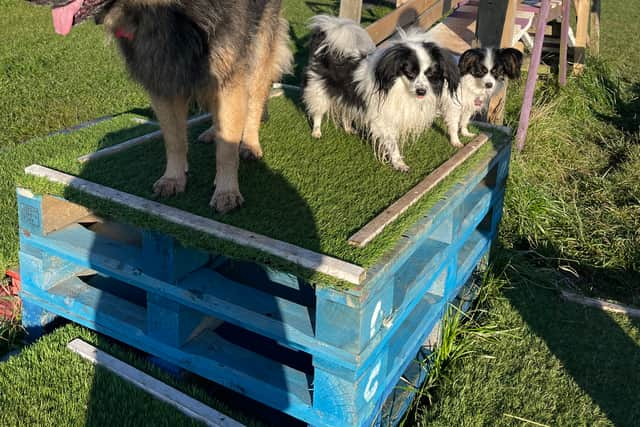
As a result, she said she was not allowed to join the netball team at school, she was always “picked last” in PE, and she would often bump into her surroundings.
She was, however, a talented swimmer and trained and competed for many years with the Scottish Para Swimming team, which first fuelled her dream of going to the Paralympics.
While Kirsten was never bullied, she said the “lads” at school would make “rowdy comments”, such as: “Is your phone close enough to your face?”
As a young teenager, this bothered Kirsten, especially as she wanted to “look normal” – but she said “learning to laugh” at herself was the best remedy.
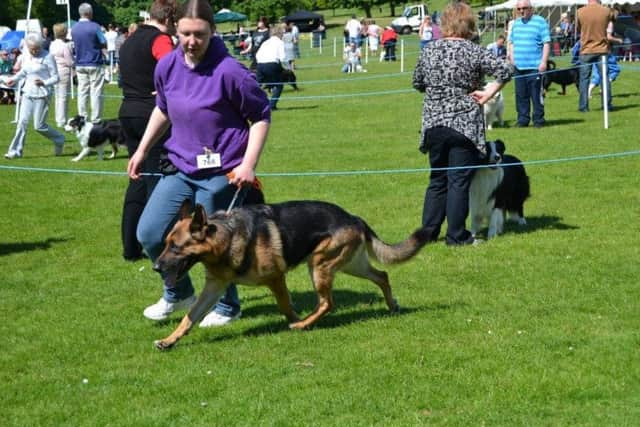
As Kirsten’s central vision decreased, leading her to walk into wheelie bins and “obvious objects”, she said she was given a cane, aged 15.
Around this time, she got her first German Shepherd – a “special girl” called Bandit – and she began training the pup to learn agility and obedience skills.
Two of Bandit’s puppies – Havoc and Chaos – first competed at Crufts in 2008, which was “absolutely unbelievable”, and she and her family have entered every show since.
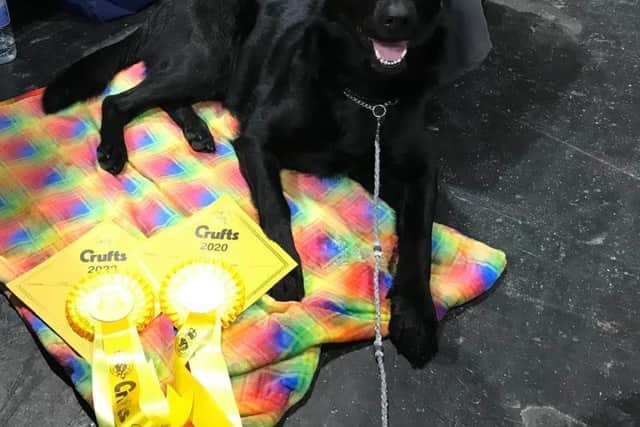
Kirsten ended up quitting swimming, aged 18, to focus on Crufts, but in 2016, she decided to go to a Scottish Disability Sport “Have a Go” Day, where she tried judo for the first time.
This ignited her love for the sport and now, having joined her local club, Tayside Judo Club, she is aiming for the 2024 Paralympics in Paris.
Kirsten loves the fact that judo is “inclusive” and adaptable, with no “special equipment” needed, and she has travelled the world with British Judo to places such as Kazakhstan, Portugal, Germany and Turkey.
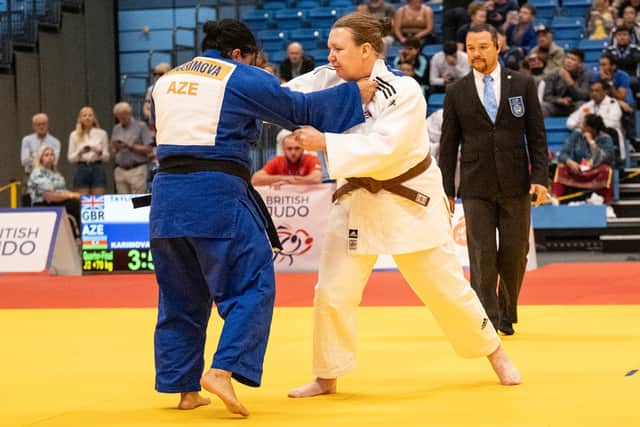
Kirsten has picked up various judo accolades – a silver medal at the IBSA Grand Prix Nur-Sultan 2022, a bronze medal at the European Championships 2023, and a bronze medal at the IBSA Grand Prix Egypt 2023 – and with support from her coaches, her confidence has grown enormously.
“I believe confidence is like a muscle, you have to work it. The more you work it, the better it gets,” she said.
Kirsten is currently preparing for the 2024 IBSA Judo Grand Prix Tbilisi in Georgia, where she will find out if she has claimed enough qualification points for the Paralympics.
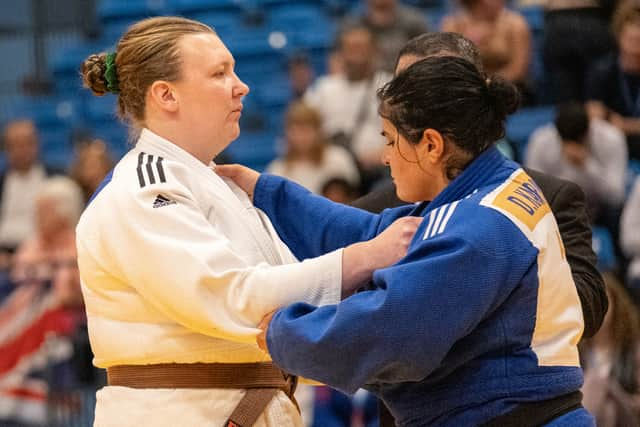
“It’s the one (sport) I’ve done where I’ve felt the most normal with it. There’s very little adaptation needed,” she said.
“As long as you’ve got a coach whose teaching technique is to remember to use their words, that’s the most important part.”
On the advice she would give to others, she added: “It’s never too late and just give it a go.
“Everyone should do judo, especially girls.”
For more information about judo clubs across the UK, visit: britishjudo.org.uk