
Extend Awaab’s Law to temporary accommodation, ministers urged
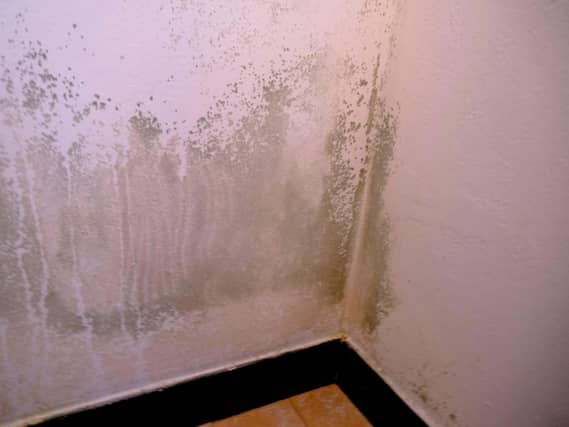

Scottish Labour said people living in temporary housing should not receive weaker protections against damp and mould.
The Scottish Government has been urged to extend a new housing law designed to protect tenants from mould to temporary accommodation.
Awaab’s Law came into force in Scotland earlier this month in an effort to ensure mould issues are dealt with promptly.
It is named after a two-year-old boy who died from a respiratory condition caused by mould in his family’s flat in England.
The regulations do not extend to temporary accommodation or short-term lets.

Scottish Labour housing spokesman Mark Griffin has written to the Government pushing for the law to be strengthened, with a focus on temporary accommodation provided for homeless people.
“As you will be aware, during consideration of the Housing (Scotland) Act 2025, I supported the introduction of Awaab’s Law provisions and lodged amendments aimed at strengthening protections for children and families experiencing poor housing conditions, including those living in temporary accommodation,” Mr Griffin wrote.
“Throughout scrutiny of the legislation, I consistently raised concerns that households in temporary accommodation should not receive weaker protections against damp and mould than those living in the social or private rented sectors.”
Mr Griffin referenced advice from the regulatory review group on the law, which warned landlords could move out of the long-term rental market in order to avoid the regulations.
He added: “Given the continuing housing emergency and the record numbers of households, including children, living in temporary accommodation, it is vital that those living in some of the most precarious housing circumstances are not left with weaker protections against damp, mould and associated health hazards.
“The Scottish Government previously recognised this issue and indicated that further work would be undertaken.
“The publication of independent advice reiterating the same concern raises questions about what progress has been made in the intervening period and whether households in temporary accommodation can expect equivalent protections in the near future.”
Mr Griffin also asked the Government what work has been done on extending the law, the extent of damp and mould in temporary accommodation and timescales for any changes.
He added: “During Scotland’s housing emergency, while tens of thousands of households remain trapped in temporary accommodation, it is imperative that every child is afforded the same protection from damp, mould and unsafe housing conditions, regardless of the type of accommodation in which they are living.”
A spokesman for the Scottish Government said: “Everyone deserves the right to live in a warm, safe and secure home, free from disrepair.
“The Scottish Government expects temporary accommodation to be of high quality and to meet the needs of the people living there.
“Local authorities are encouraged to apply Awaab’s Law protections to temporary accommodation as best practice and must continue to ensure it meets the tolerable standard and unsuitable accommodation order.
“We are also working to reduce lengthy stays in temporary accommodation, supported by continued investment in the affordable housing supply programme.
“This is backed by £926 million this year as we work towards delivering 110,000 affordable homes by 2032, at least 70% for social rent.”