
Readers rally behind Sally Rooney as UK orders pour into Galway bookshops
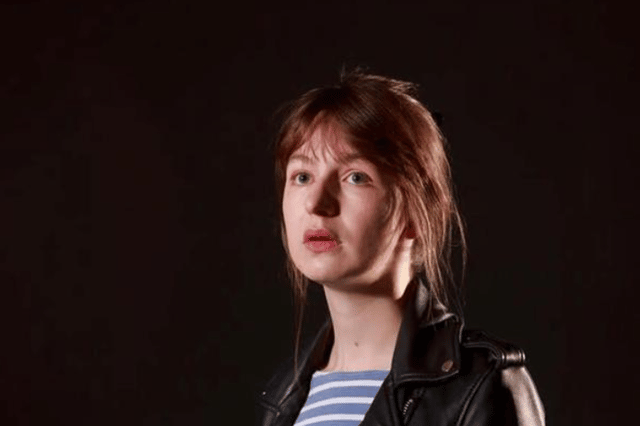

Readers in Britain are buying Sally Rooney novels they already own from Galway’s Kenny’s Bookshop in a show of support for the Irish author.
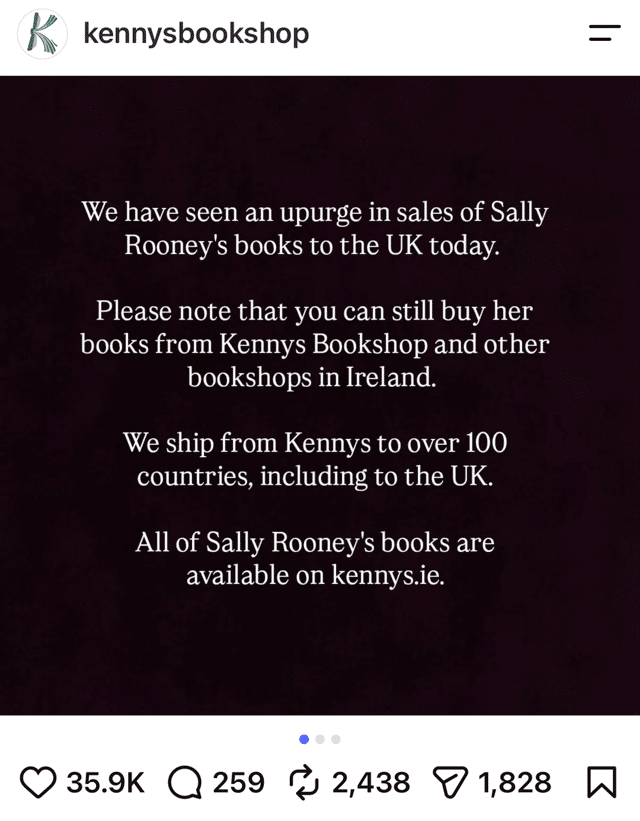
Hundreds of copies have been sold in the past four or five days following publisher Faber’s decision to stop supplying her work in the UK, with customers sending messages of solidarity alongside their orders.
Tomás Kenny pointed to Nielsen BookScan figures reported by trade publication the Bookseller on Wednesday, showing UK sales of Rooney’s books rose 331.6% to 4,351 copies last week, from just over 1,000 the previous week.
He said this was a particularly substantial increase for Sally Rooney’s older titles of which shops would ordinarily hold relatively few copies.
Now run by the third generation of the Kenny family, the bookshop celebrated its 85th anniversary in 2025 and began selling books online in 1994, a year before Amazon.
For Tomás Kenny, the accompanying emails reveal what is driving demand.
Some customers have never read Sally Rooney; others already own every novel.
“‘I already own all these books, but, you know, I want to support her,’” he said, describing the messages.
Speaking to the Connacht Tribune, Tomás Kenny said the initial surge had levelled off, but demand remained high. Irish orders had risen modestly, with the overwhelming increase coming from the UK.
Faber announced on October 14 that it would stop supplying Rooney’s work in the UK, with her agreement, because British legislation prevented it from passing on her earnings.
The decision followed her pledge to support Palestine Action, which is proscribed as a terrorist organisation in the UK.
A host of Irish celebrities, including Normal People stars Paul Mescal and Daisy Edgar-Jones, as well as Jessie Buckley, CMAT and KNEECAP, signed an open letter in support of Sally Rooney this week.
Her novels have not been banned: existing UK retail stock can remain on sale. Faber remains her publisher and continues selling her work elsewhere.
British booksellers have also approached Kenny’s for supplies.
As the Galway business is not a wholesaler, Tomás Kenny has referred them to an Irish supplier.
He said independent shops, particularly those with a strong political ethos, were determined to keep Rooney’s books available.
“I’ve been amazed and impressed in the last week by the amount of phone calls I’ve gotten from friends who run bookshops in England who are trying to think of any way that they can, by hook or by crook, make sure they have these books available.”
Sourcing stock has remained straightforward. Some titles can become temporarily unavailable during reprints, he said, but such interruptions were routine.
The bigger test, he believes, will come with Rooney’s next novel.
“What happens when she has a new book coming out? Because if that’s not able to be sold in the UK, then that’s a far bigger deal.”
For Kenny, the situation carries a historical irony. England had once offered an escape from the restrictions of Irish censorship, he said.
“Now here we are in a situation where it’s the direct opposite. And I just find that bizarre.”
Although Rooney’s books had not themselves been censored, he felt the withdrawal had effectively produced a similar result.
It recalled his grandmother’s stories about the family’s lending library on Galway’s High Street, where the cover did not always tell readers what was inside.
“They used to send books out with a dust jacket for a different book,” he recalled.
“So Lady Chatterley’s Lover would be there. But the dust jacket might be for the history of Ireland or something.”