
Top musicians for special concert to honour Galway songwriting legend Pádraig Stevens

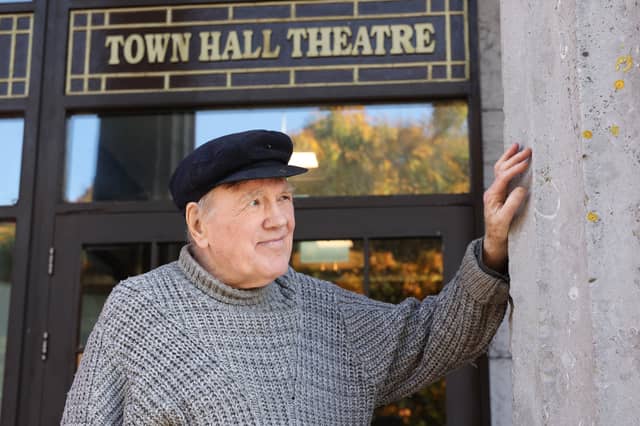

I try to write epic songs and they all turn out small,” says singer-songwriter Pádraig Stevens with a laugh. That’s not something that should keep the former Saw Doctor drummer and manager of legendary Tuam band, Blaze X awake at night though.
Like Patrick Kavanagh and his hero Séamus Heaney – whose early poem ‘The Forge’ was an inspiration – Pádraig's songs let us see ‘small’ things in a new light.
That gift and his lifelong contribution to music will be celebrated in the city’s Town Hall Theatre on Monday, November 2, at a special event, Oíche Phádraig. Guests will include Leo Moran and Davy Carton of the Saw Docs as well as former member Mary O’Connor, Matt Keane, Little John Nee, The Whileaways, Ruth Dillon and Áine Tyrrell, Rod Goodall and a host more, including Bríd Dooley – as a child, she became the first person to sing one of his songs. Midie Corcoran, who with Leo Moran and Fergal McGrath of the Town Hall, spearheaded this event, will MC.
The house band will include Jimmy Higgins, Pearse Doherty, Anto Thistlewaite, Leo Higgins, Dave Clancy and Máirtín O’Connor, as an all-star line-up honours Pádraig whose songs have been recorded by the likes of Christy Moore, Mike Denver, Eleanor Shanley and Matt Keane and who has played with bands from the Stunning to Dé Dannan and, of course, the Saw Doctors.
His mother, Nancy Leonard, had been teaching in Kilcoona near Headford, in the late 1930s when she met Paddy Stevens, from Corofin, a farmer and All-Ireland-winning footballer. After their wedding, she could no longer teach as Ireland banned married women from working in the public sector. So they moved to her home place in Sligo, a small farm with a handsome homestead near Ben Bulben. Pádraig was born in Sligo and spent his early years there.
“It was a wrench to leave the place where I had my bearings between the mountain and sea,” he says.
They did so because his mother was offered a teaching job in Belclare after the ‘ban’ was lifted. Pádraig laughs, saying the parish wanted his father back for his footballing skills.
They first settled in Caherlistrane and Pádraig who was in sixth class, attended the local school. For secondary, he cycled to Tuam daily until they moved to the town.
Nancy loved poetry and used to quote it when she wanted to give the children a life’s lesson. Pádraig’s love of words came from her and from his grandmother, who had taught him to read at an early age.
All his life, when writing songs, that love has led him to choose his words carefully.
“It’s like building a wall; the stone will only fit one way.”
The teenage Pádraig embraced music in Tuam in the 1960s and was involved in a band, but there was no tradition of writing songs.
His group, The Problems, did write one, but the fashion then was to perform popular showband songs rather than penning original material.
Ultimately, it wasn’t for Pádraig, a man who always followed his own path.
When it came to a job, he had no interest in farming, which was normally the route taken by the eldest son back then.
“My father found me a job in SPS in Mervue,” he recalls with a laugh. That allowed him to hang out in Galway, where he discovered a nascent folk and blues scene, with the likes of Johnny Mulhern, Seán Higgins and Henry Higgins.
Johnny Mulhern and Tony Small were writing and performing their own songs and Pádraig was smitten.
When they emigrated, it spurred him to move away too, to London. This was the early days of punk, when you’d “learn to play three chords and write your own songs”.
Pádraig did that “and nobody laughed at them”.
Some years later he returned home for a family funeral and “it made sense to stay”.
By then, Tuam had a songwriting scene and Blaze X was at its heart, with members including Paul Cunniffe, Paul Ralph and Davy Carton. Pádraig became their manager and they enjoyed success around Galway, including playing support to U2 in Leisureland.
It was through Blaze X he first heard of 14-year-old music-mad Leo Moran.
“I remember the first time I saw him walking up the street with a bunch of albums under his arms, looking like he was from the Ramones.”
Leo helped with promoting Blaze X gigs and despite the age difference – Pádraig was 30 – it was the start of a lifelong friendship.
Blaze X performed from 1979-81 and when the group “finished naturally” Pádraig returned to London. A few years later, he got a call from Leo, telling him about a new band he and Davy were setting up. It was the Saw Doctors and they wanted a drummer.
Pádraig was in. He also joined the fledgling Macnas theatre company, based in Galway City's Fisheries Field, producing magic work like 'Gulliver', with most people being on FÁS schemes.
“None of us had any money,” he says, but it was a time of great enthusiasm and creativity.
He recalls the early days of the Saw Doctors and their UK tour with the Waterboys, being in the front of the van with driver Paddy O’Neill as the lads were writing ‘My Heart is Living in the 60s Still’ in the back. Pádraig wrote several songs with the group, including' I Useta Lover', 'Still the Only One' and 'That’s What She Said Last Night', but their focus was different and he left. Six months later, they were at number one and he was signing on the dole.
“The social welfare officer looked at me with pity,” he laughs.
It was a confusing time for him and the others, but any tensions were short-lived.
“Leo Moran is a good man,” he says simply. “And I didn’t know it at the time, but living in Clonboo, writing songs was the best thing.”
Soon after, the Saw Docs recorded an album which included songs he’d co-written, “and gave me a wad of money so I could record my own album”.
He did that in Kenny Ralph’s studio in Tuam. Pádraig has written and recorded many more songs since then, building a loyal fanbase, and is much-admired by fellow musicians.
He’s always liked performing but as a solo artist, found organising gigs and tours difficult.
“It takes a lot of hunger and ambition to promote yourself and I don’t have that really.”
He was happy writing. “And when people asked me to do gigs, I did them.”
Leo Moran, who formed The Cabin Collective in 2013 when the Saw Docs were on a hiatus, invited him to do just that in 2017, and they toured at home and abroad before Covid halted performances. Since then, the Saw Doctors have revived, so Leo is busy.
Pádraig doesn’t mind. Back living in the family home in Tuam, he’s involved in the local scene and, in August, attended a musical event to honour the late Paul Cunniffe.
Seeing him that night, the organiser Midie Corcoran decided it was high time to do likewise with Pádraig. He mentioned it to Leo Moran, who said Town Hall Theatre manager Fergal McGrath – also from Tuam and a former Saw Docs drummer – had just approached him with the same idea.
Pádraig was blissfully unaware of this until Fergal approached him about a possible celebration.
“I thought about it and spoke to a couple of people, and could find no objection,” Pádraig says. And so, his friends and colleagues have pulled out all the stops to make it memorable.
By his own choice, Pádraig is unaware of the full line-up.
He is aware that the tickets, which went on sale last Friday, sold out immediately. That was a pleasant surprise.
“You have no idea how you are viewed by other people,” he says. While he hasn’t been writing songs of late, due to health issues, he is working on a book of his lyrics with artist Kate O’Shea, who approached him about collaborating. She’s creating the artwork.
He’s loving it and has proofs of the book on his phone. Alongside the songs and art, there are photos of his parents, of Pádraig making his first communion, and of him and his siblings – he’s one of seven and is especially close to his sister Evelyn, who helped establish both the Family Planning Association and Aids Help West in Galway – that’s been the way since childhood, he remarks.
The book, with its songs, is an overview of his life, and also offers an insight into the people, places and events he has been drawn to write about.
There’s never any great plan, he explains.
“A song will emerge from nothing. A rhythm, maybe or an idea or a phrase.
“I could have the first line in my head and if I can find a rhyme, it’ll signpost me where to go next.”
And from a time when he didn’t have pen and paper to hand when writing, he memorises his songs as he goes. Knowing them inside-out also makes it easier when he goes on stage.
“There’s plenty else to do when you’re performing,” he remarks.
Christy Moore’s version of his iconic song 'The Tuam Beat' brought it to audiences at home and abroad, and came about via the Stunning’s Jim Higgins who plays with Christy, as well as with the Saw Docs and Máirtín O’Connor.
Jimmy suggested to Christy that he record the song about Padraig’s home town and its once-thriving sugar factory that employed so many people. Pádraig was pleased but he doesn’t get too excited. He writes the songs and “lets them go” to find their own life elsewhere.
As his friend Leo Moran explains, when people ask Pádraig about his best song, “the answer is always the same” and it’s simple: “the newest one.”