
Colombians to vote for president amid widespread discontent


Colombians emerging from the coronavirus pandemic are voting for their next president, choosing from six candidates who all promise various degrees of change amid rising inequality, inflation, violence and a discontent with the status quo.
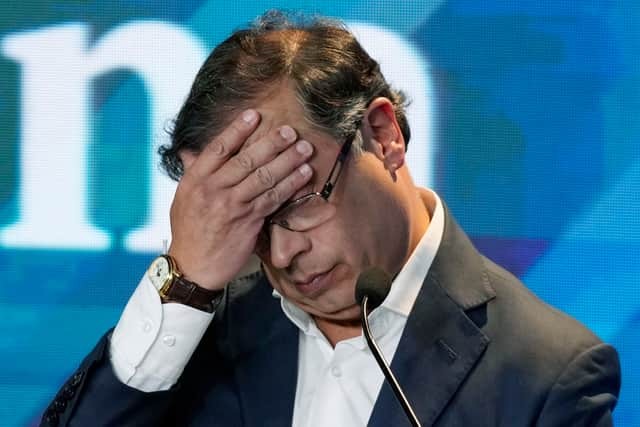
The ballot includes former rebel Gustavo Petro, who could become Colombia’s first leftist president on Sunday if he can get the 50% of the votes needed to win in the first round. If no-one gets more than half of the votes, a run-off will be held between the top two candidates.
This is the second presidential election since the government signed a peace agreement with the Revolutionary Armed Forces of Colombia, known as FARC, but the divisive agreement was not a central campaign issue as matters like poverty and corruption garnered attention.
It will be Mr Petro’s third attempt to be the South America’s country president. He was defeated in 2018 by Mr Duque, who is not eligible for re-election.
His victory would usher in a new political era in a country that has always been governed by conservatives or moderates while marginalising the left due to its perceived association with the nation’s armed conflict. He was once a rebel with the now-defunct M-19 movement and was granted an amnesty after being jailed for his involvement with the group.

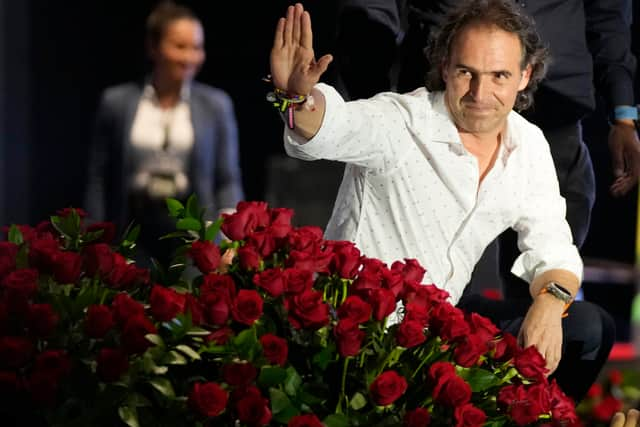
His main rival for most of the campaign has been Federico Gutierrez, a former mayor of Medellin who is backed by most of Colombia’s traditional parties and ran on a pro-business, economic growth platform.
Mr Gutierrez has promised to fight hunger with the extension of subsidies and public-private alliances so that 10 tons of food that go to waste each year are destined for the poorest.
A Gallup poll conducted earlier this month showed that 75% of Colombians believe the country is heading in the wrong direction and only 27% approve of Mr Duque. A poll last year by Gallup found 60% of those questioned were finding it hard to get by on their household income.
Meanwhile, the country’s inflation reached its highest levels in two decades last month. Mr Duque’s administration has justified April’s 9.2% rate by saying it is part of a global inflationary phenomenon, but the argument has not tamed people’s discontent over increasing food prices.
In addition to economic challenges, Colombia’s next president will also have to face a complex security issue and corruption, which is a top concern of voters.
The Red Cross last year concluded that Colombia had reached its highest level of violence in the last five years.

Mr Duque’s successor will have to decide whether to resume peace talks with the ELN, which he suspended in 2019 after an attack killed more than 20 people.
Aware of voters’ corruption worries, real estate tycoon Rodolfo Hernandez has placed the issue at the centre of his campaign.
The former mayor of Bucaramanga surprisingly rose in the final stretch of the campaign after promising to “clean” the country of corruption and to donate his salary, among other measures.
The other candidates on the ballot are Sergio Fajardo, former mayor of Medellin and candidate for the centre coalition; Christian leader John Milton Rodriguez; and the conservative Enrique Gomez.