
Engineer with prostate cancer who has urinary incontinence wants to increase understanding so men avoid ’embarrassment’
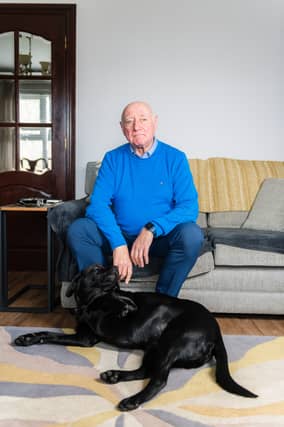

An engineer with prostate cancer who has urinary incontinence as a result of his treatments has said he wants to increase education and understanding so that men can have “a degree of dignity” and avoid “embarrassment” while living with the condition.
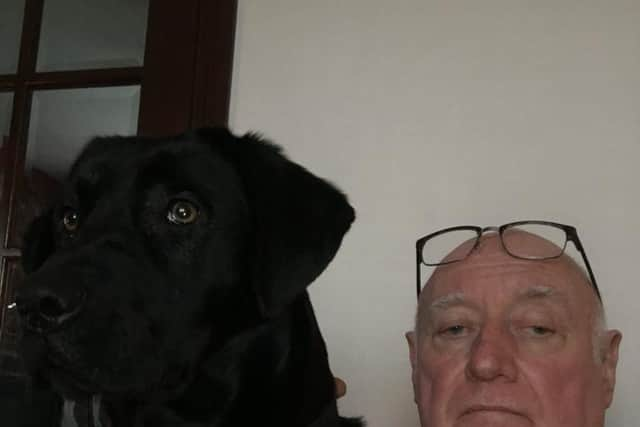
Mervyn Bryans, 69, a current part-time engineer who lives in Belfast, was diagnosed with prostate cancer at the age of 57.
He explained that he has a family history of the disease, as his mother had breast cancer and his grandfather had prostate cancer, although he had no symptoms prior to his own diagnosis.

However, Mervyn refuses to let urinary incontinence make him “walk away and wither and die”, and he wants to encourage men not to “bury their head in the sand”, but rather talk about it and seek advice.
“Incontinence is just one of those things that you live with; some people hide it, some people ignore it, which is part of the problem with prostate, specifically prostate cancer,” Mervyn said.
“The earlier that you recognise that you have a problem and deal with it, the easier and more beneficial it is for you along the line.

Prostate cancer usually develops slowly, so there may be no signs for many years, the NHS says.
Mervyn had no symptoms, but after having multiple biopsies, he was diagnosed with the disease at 57 and later underwent brachytherapy – a form of internal radiation therapy – before having robotic surgery to have a radical prostatectomy at Addenbrooke’s Hospital in Cambridge.
The surgery involved removing his prostate – a walnut-sized gland found at the base of the bladder – along with part of his bladder, and this resulted in him developing urinary incontinence – the unintentional passing of urine.
“It’s like trying to grip the neck of a bottle, you can’t close it completely,” Mervyn explained.

According to Prostate Cancer UK, for the more than 475,000 men living with or after prostate cancer in the UK, many will experience urinary incontinence as a side effect of treatment for the disease.
For Mervyn, he said he was “unlucky”, but he manages the condition by wearing pads, which come in a variety of sizes depending on the level of protection needed, and incontinence pants.
Mervyn said he will most likely use three to four pads per day, and sometimes even more when travelling – and they are not inexpensive either.

“It’s just all sorts of things that become a stumbling block all the time,” he said.
“You can look at it and say, ‘well, I’m at the age I am and it’s just life, you can’t do much about it, and once you hit that milestone’ … but it’s your cricket, you’ve got to get playing it.”
One of the other major challenges that Mervyn faces is the disposal of pads.

For Mervyn, he said the larger pads and incontinence pants are “harder to dispose of, especially discreetly,” in public places, and if he uses disabled toilets, people often pass judgmental looks or comments.
“Because you look as if you’re relatively okay and mobile, then using disabled toilets has an added problem,” he said.
“If the disposal bins were there and clearly marked as to what they were, then people would appreciate that and others would think, ‘Ah, maybe he’s using it for that’.”
Mervyn has now resorted to using dog poo bags for his used pads to enable cleaner disposal, as carrying them to a bin is unhygienic and can be “embarrassing”.
“You’ve got the aspect of carrying them, the aspect of changing, and then you have the aspect of disposal … so it is a problem, specifically for this, and it needs to be looked at,” he added.
Mervyn’s urinary incontinence affects his everyday life; he now only wears dark coloured trousers and he no longer attends events, such as rugby matches, over concerns of toilet accessibility.
Sitting and standing still is typically not a problem, but Mervyn said shifting from one position to the other can cause “leakage”, adding: “It’s restricting in some ways that you wouldn’t really think of ordinarily.”
However, sometimes, an unexpected problem can arise.
“I was flown into Gatwick Airport and I was only there for the day,” he said.
“I had enough pads in a bag, everything was fine, and the flight was cancelled.
“I had to go to a supermarket and buy nappies and cut them so that I was okay – that’s the type of thing that can happen.

Mervyn said he has accepted that he will have difficulty with urinary incontinence for the rest of his life, but he has open discussions about it with his family and he wants to improve people’s “education and understanding”.
Mervyn is now a volunteer with Prostate Cancer UK’s Northern Ireland Hub. The hub is active in raising awareness through talks with health trusts, construction companies and community groups, and members regularly assist with fundraising events.
He hopes that, by sharing his story, he can increase awareness of prostate cancer and male urinary incontinence, so that the conditions are more widely accepted, acknowledged and accommodated for – and that is why he is backing the Dispose with Dignity campaign.

“I have far too much to live for to let (prostate cancer and incontinence make me) just walk away and wither and die,” Mervyn said.
“Everybody has challenges in life, you’ve got to get over hurdles, you’ve got to attain certain things – it’s the nature of the beast.
“Your journey that you make is your journey. Nobody else can take it for you.
“You’ve got to be happy in your own skin, so dealing with the problem is the only way to do it, as opposed to leaving it to deal with it another day because another day might not come.”
To read the full report commissioned by Prostate Cancer UK and phs Group, visit: www.phs.co.uk/equality/male-incontinence/