
Getting under the skin of the new Renault 5

Until now, I’d only enjoyed a few short drives in the Renault 5, and it was clear the reborn R5 drove just like a small car should. Tight turning circle, easy to see out of, darty enough around town. But this drive would reveal if it amounts to more than just a fashionable trinket.
The 5 really is sparking life back into Renault; it’s the EV everyone is talking about and comes from a brand that’s had its fair share of ups and downs over the past 15 years. So, to understand a little more about the car and how Renault is plugging into EVs, I decided to drive an R5 back to where it was made and learn more about Renault’s electric car revolution.
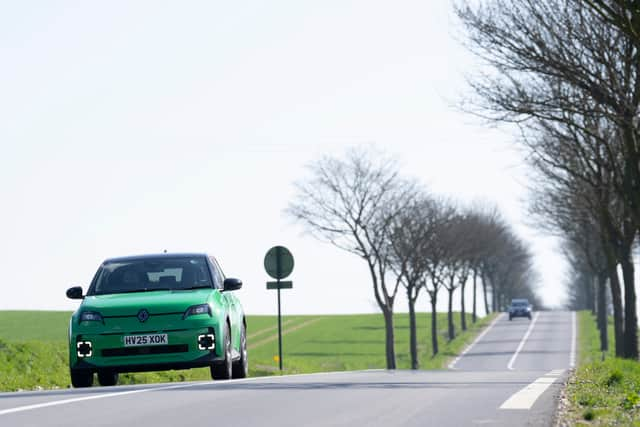
For this trip, I wanted to experience more rural roads, pass through some typically French villages, and in the early stages, enjoy a relaxed journey to my overnight stop. So, a quick charge near Folkestone meant I had a full battery as I hit Calais and those famous French ‘D roads’.
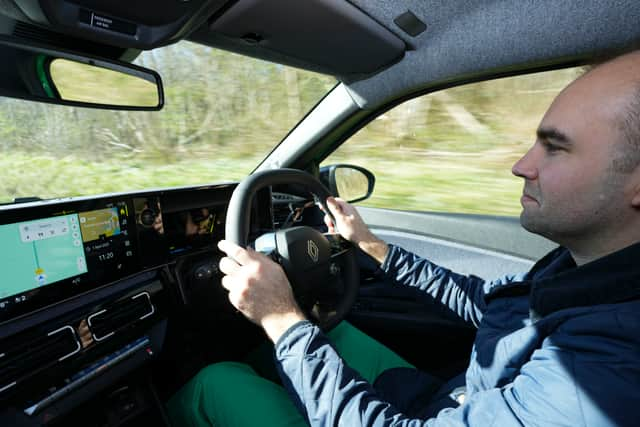
It took a little over three hours to drive the 211 kilometres to my overnight stopover in Valenciennes, a town deep in Northern France. It had been a largely uneventful journey, only serving to show just how comfortable and refined the Renault 5 is.
One stop in a charming market town saw a quick break to stretch the proverbial legs and the purchase of two baguettes – both of which were to reside on the R5’s parcel shelf, just for cliched photographic purposes, you understand – before a blast along a motorway, a quick top-up at an ultra-rapid charger, and then to Valenciennes.
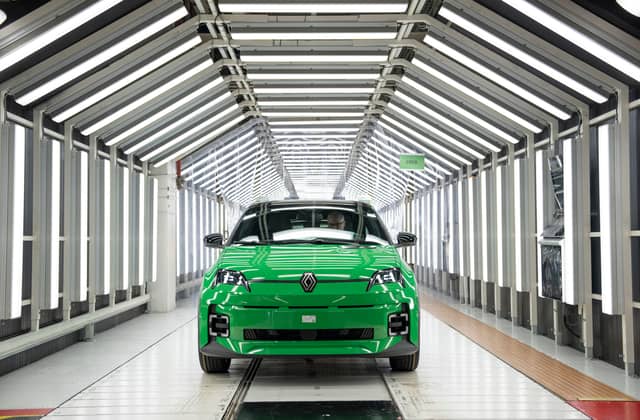
At the factory and with the inevitable safety gear donned, it’s time to see how a Renault 5 is built. The Douai facility is steeped in history and stretches back to 1974 when, rather fittingly, it began building the original Renault 5. Over the intervening years, it has produced models like the Renault 9, Fuego and Megane. But its modern transformation began in earnest in 2019 when Renault announced Douai would become its first all-electric plant.
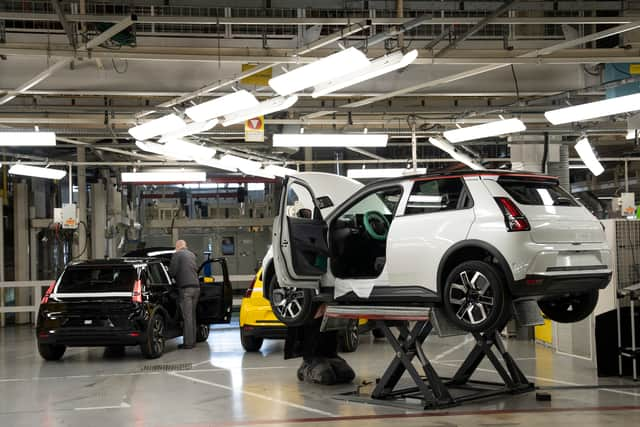
Constant improvements mean the Douai factory doesn’t look like it’s a product of the seventies. I try to follow a Pop Green car from start to finish, and when walking from Body in White, down the line where the electric platform is mated to the car, and along Final Trim, I notice that there’s still a remarkable balance between automation, AI guidance and manual working – the era of the pure-robot car factory isn’t here just yet.
In reality, Douai is just like most of Renault Group’s cutting-edge production plants, and indeed like those of its competitors. But there is one crucial difference from any factory I’ve been to before – and that’s batteries.

One of the biggest cost challenges for any EV is the battery, which accounts for up to 50% of total production costs. Ampère is working on various ways to reduce this, including transitioning to cell-to-pack construction by 2026 and embracing cell-to-chassis technology, already pioneered by Chinese brands like BYD, by 2028. A switch to LFP batteries, with their cobalt-free construction and sub-15-minute charging times, is in the pipeline, too.
But that’s the future. In the here and now, the factory is churning out 700 EVs a day with a Renault 5 taking less than 10 hours to build from start to finish. It would seem Renault is back to being at the cutting edge of the car industry; the fact that it’s also producing ultra desirable cars like the 5 also shows that the French brand has rediscovered its mojo, too.
Heading back for my train home to Blighty, I’m able to take things a little more slowly – and it dawns on me that the Renault 5 is an important piece of automotive history, brought nicely up to date in its latest incarnation. More treasure than trinket, you could say.