
Government borrowing climbs to lower-than-expected £4.3bn in July

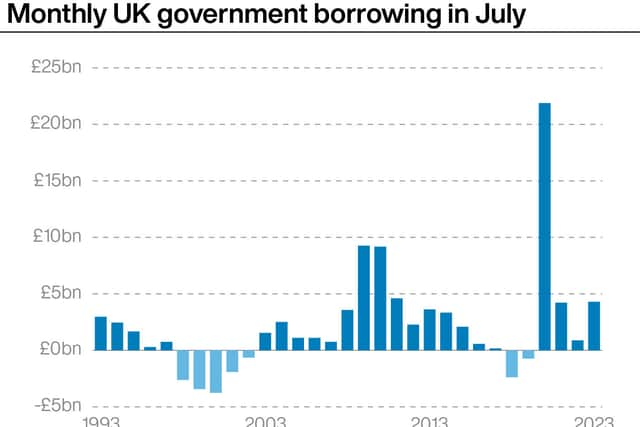
UK government borrowing was lower than expected last month, but was still more than four times higher than a year ago and remained the fifth highest July borrowing since records began, official figures have shown.
The Office for National Statistics (ONS) said public sector net borrowing, excluding state-owned banks, stood at £4.3 billion in July, £3.4 billion more than a year ago, but substantially lower than in recent months due to higher receipts of self-assessed income tax.
Most economists had expected borrowing of £4.9 billion in July, while the UK’s official forecaster, the Office for Budget Responsibility (OBR), had predicted £6 billion.
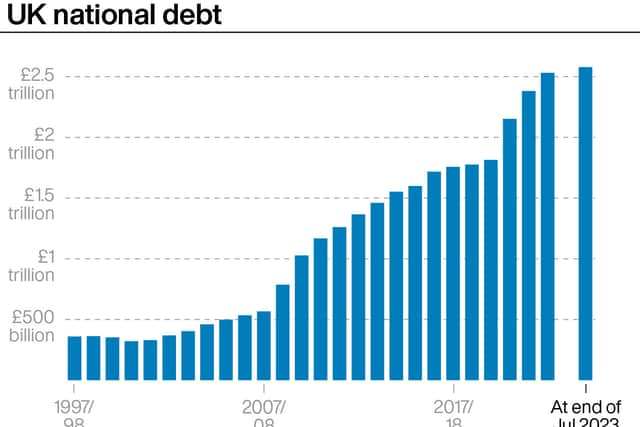
The ONS added that net debt stood at £2.58 trillion at the end of July, equal to around 98.5% of the UK’s gross domestic product (GDP) and 1.9% higher than a year earlier.
Official figures earlier this month estimated that the economy grew by a better-than-forecast 0.2% between April and June.
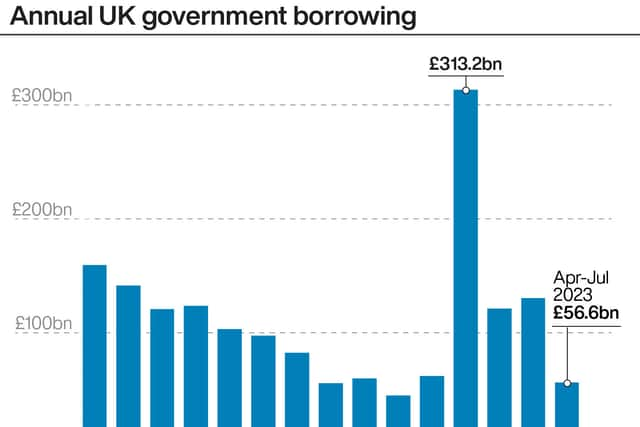
The ONS said that borrowing in the first four months of the financial year so far stood at £56.6 billion, which was £13.7 billion more than the same period last year, but £11.3 billion less than the £68 billion forecast by the OBR.
Chancellor Jeremy Hunt said: “As inflation slows, it’s vital that we don’t alter our course and continue to act responsibly with the public finances.
“Only by sticking to our plan will we halve inflation, grow the economy and reduce debt.”
But Gabriella Dickens, at Pantheon Macroeconomics, said the outlook for debt interest payments is still painful and may see the Government offered little “wiggle room”.
The interest the Government paid on its debt hit £7.7 billion in July – £1.5 billion more than a year earlier and the highest seen for any July since records began in 1997.
Britain’s debt interest bill has been rocketing over the past year, reflecting the impact of sky-high retail prices index (RPI) inflation on index-linked gilt stock.
Inflation is easing back from highs seen in October last year, which is expected to lead to reductions in the Government’s debt interest payments from next month.
And while borrowing is set to come in below the OBR’s forecast for the 2023-24 financial year, she said: “We still doubt, however, that the Chancellor will have enough wiggle room to meaningfully cut taxes or increase expenditure in the run up to the next general election, which must be held by January 2025.”